Neleman has been reaching customers through multiple channels and campaigns for years. For a brand like Neleman, reach is not an issue. Even so, there is no one-to-one relationship between “more channels” and “revenue”.
Using more channels does not automatically lead to more revenue. The real challenge is to make an omnichannel approach more profitable. With a sharper focus on customer value, Neleman managed to improve conversion.
Neleman makes organic wine under the motto “Good Wine To Save The World”. The company owns its vineyards, with a winery in Valencia, and puts quality first. More than 5,000 co-owners have invested alongside it. Neleman sells online and has stores in Amsterdam, Utrecht and Zutphen.

Partner
mailmeisters set up the omnichannel and segmentation approach.
Campaigns
SMS at busy sales moments, a birthday direct mail triggered from a flow, abandoned baskets retargeted through a Meta audience, and direct mail for dormant high-value customers.
Website
“About to lose” message bar: +48% conversion uplift, +2,470% total value uplift. Social proof on product pages: +161% total value uplift.
mailmeisters is the partner that supports Neleman in setting up and delivering the omnichannel and segmentation approach. All collected data flows into the Customer Data Platform (CDP) Spotler Activate, where the different customer profiles are built.
The wine market is driven by promotions. Wine is often sold through special offers, and customers wait for a discount. As soon as an offer appears, they place an order. This familiar consumer behaviour puts pressure on the price per bottle. For Neleman, a brand that puts quality first, that eats into the margin.
The usual reflex would be to invest more in existing marketing activity: more campaigns, more channels and more reach. But Neleman already runs plenty of campaigns, and more of the same is simply not the answer. Together with mailmeisters, Neleman developed a strategy that focuses not on more reach, but on more relevance. And it works.

“We long thought that more marketing channels would make revenue grow by itself. But every extra channel mainly demanded more time and attention, without our customers feeling better served. So together with mailmeisters we cut the knot: rather fewer messages, but better segmented. Good for revenue, the database and customer loyalty.”
Neleman started by building an RFM segmentation. Customers were placed in groups such as Champions, Loyal, Promising, At Risk and Lost, based on how recently, how often and for what amount they purchased. This made it clear where the revenue comes from and where growth is possible.
This breakdown immediately produced the most important insight. Champions make up 7% of customers and generate 31% of revenue. On the other side is a large group of one-time buyers. Rather than approaching them straight away with discount codes, Neleman opts for a warm onboarding that follows on from the first purchase.
Behaviour and purchase data determine when a repeat purchase is realistic, and at exactly that moment a follow-up is sent through the most suitable channel: email, direct mail, SMS at key moments and website personalisation. This turns a one-time buyer into a loyal customer, step by step.
With this insight, Neleman could specify far more precisely which channel suits each segment, instead of serving every segment by email. The result was a mix: email, SMS, direct mail, ads and the website working together as one experience.
SMS speeds up revenue at busy moments, a birthday direct mail follows automatically from a flow, and customers who leave their basket behind are brought back into view through a Meta audience. The website shows every visitor a relevant message.
Meta acts as an extension of email and the website. A segment sees the same campaign through Meta as it does by email or on the website, so the message is consistent across all channels.
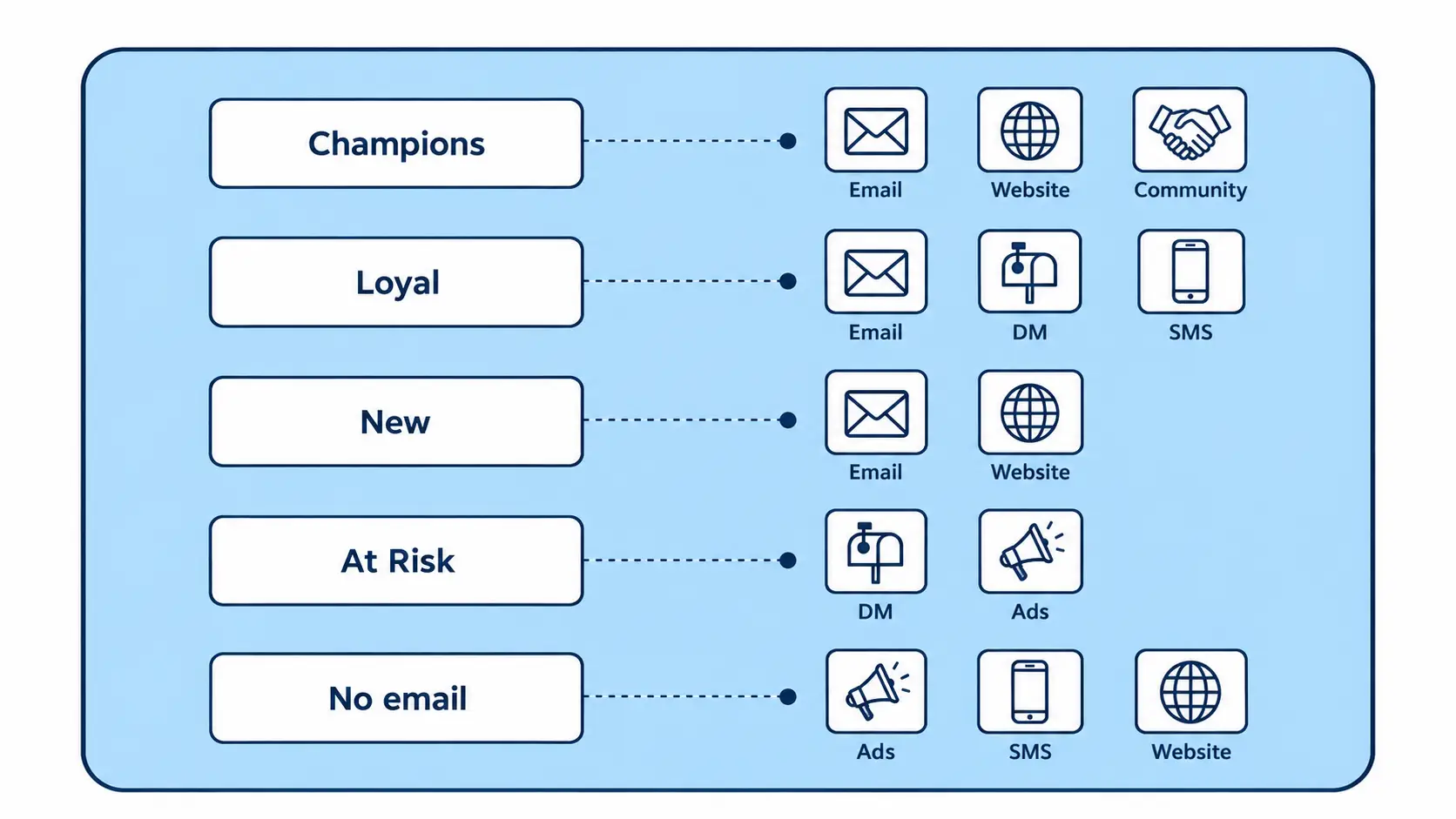
Three examples illustrate this: the use of SMS, direct mail and website personalisation.
In the omnichannel approach, SMS proves to be an effective channel for accelerating revenue at important moments. Thanks to SMS, Neleman sees 25 to 30% extra revenue and 7 to 10% more revenue from automated flows. SMS also generates more revenue in the first hours after sending and leads to a higher click rate among engaged customers.
Neleman uses direct mail selectively, for customers who deserve more than a standard email. Dormant high-value customers are reactivated, top segments within the RFM model receive a pleasant surprise, customers are rewarded after an important milestone, and customers with declining retention receive extra attention to keep them on board.
The birthday flow is a concrete example of channels working together. Customers who cannot be reached by email receive a personal direct mail within this automated flow, sent one-to-one. This allows Neleman to reach customers who fall outside the email channels.
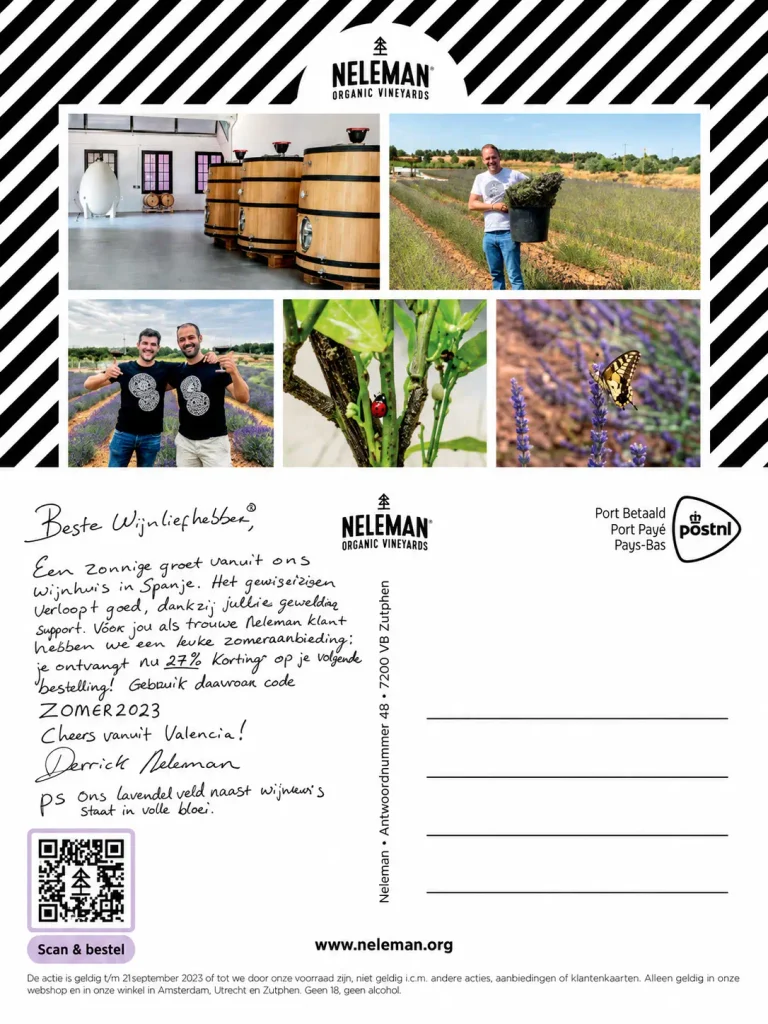
In this particular journey, only customers who no longer have a newsletter opt-in are approached. If a customer has placed an order in the past three months, no direct mail is sent either. This is therefore a reactivation of customers without an email opt-in and without a recent order.
The latest figures: 1,526 direct mails sent. Buyers after seven days: 147. The conversion rate on the cards sent is 9.6% (147/1,526). The revenue from this campaign is seven times higher than its cost.
The website completes the omnichannel approach. Every visitor sees a relevant message based on their customer profile in Spotler Activate.
Personalisation can take the form of a pop-up, an embedded content block, product recommendations, a message bar or social proof elements on product pages, depending on where the customer is in the journey and which RFM segment they belong to. Customers in the “About to lose” segment see a personalised message bar with a welcome-back offer:
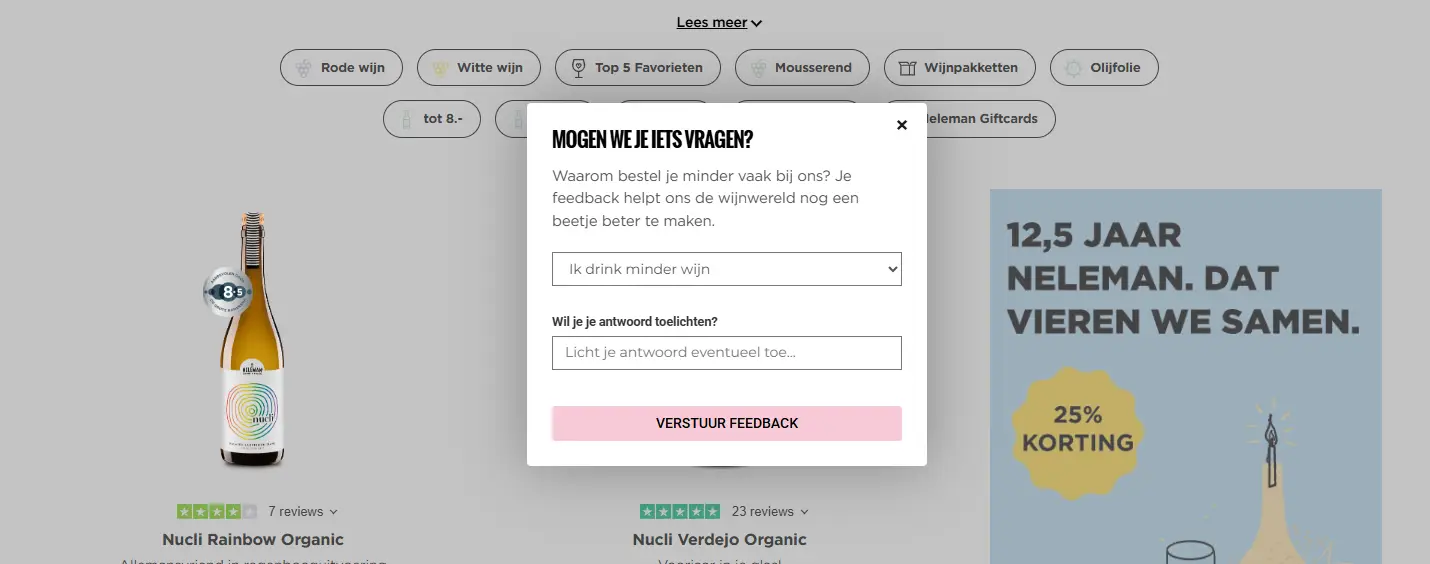
On product pages, Neleman adds social proof per segment: the number of times a wine has been sold, “last purchase x minutes ago” or how many people are viewing a page at that moment. Customers who are at risk of dropping off receive a feedback pop-up asking why they order less often. A personalised follow-up email is set up for each answer, without a discount code being the first reflex.
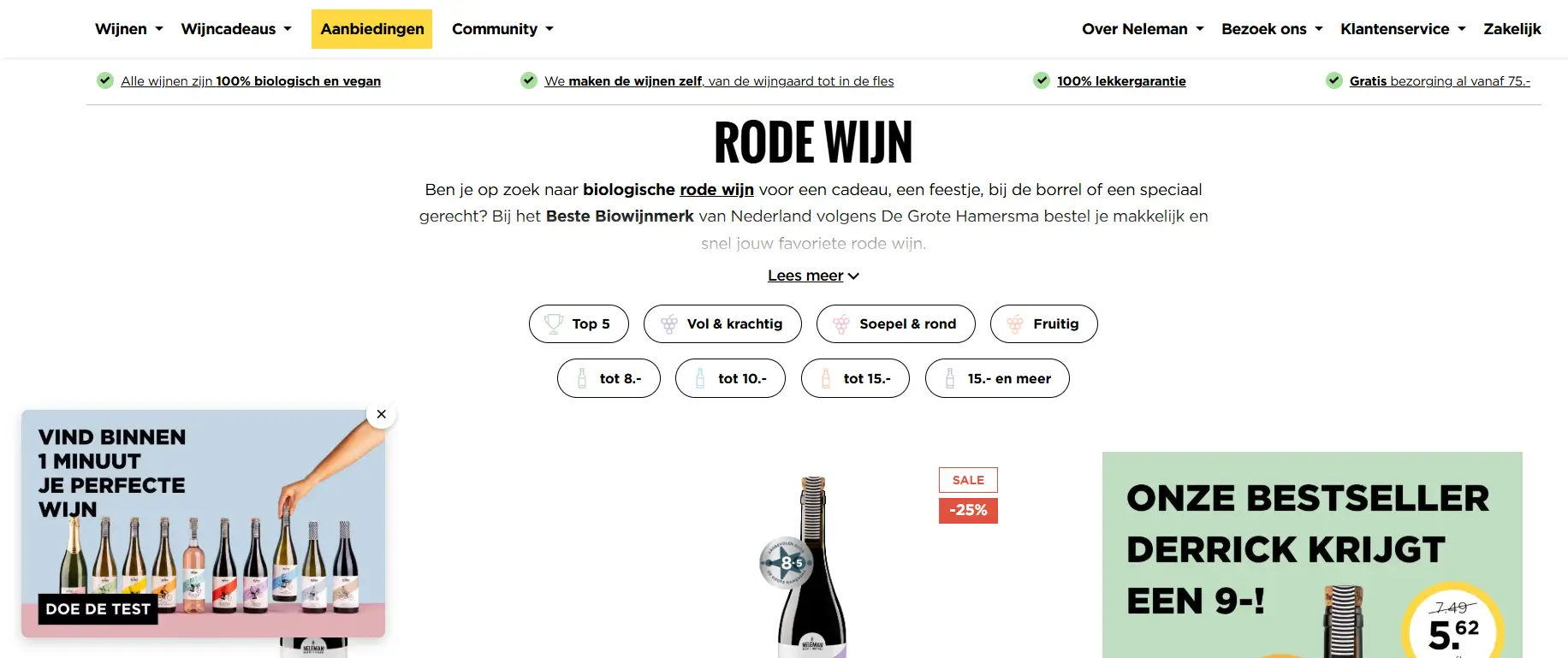
New profiles receive a wine quiz that helps them find their perfect wine in one minute. The outcome lowers the barrier to placing a first order, enriches the customer profile for future segmentation, and forms the basis for a targeted follow-up email, so the recommendation carries on beyond the website.
Less reliance on email and more attention to a true omnichannel approach paid off. Neleman sent 18% fewer emails and at the same time achieved 21% more revenue per email. Conversion rose by 10 to 23% per segment. SMS added 25 to 30% extra revenue on top of that, with 7 to 10% extra revenue from flows. Website personalisation also delivered a total value uplift of more than 2,470% among dormant customers and 161% through social proof on product pages.
More channels therefore did not automatically produce more revenue. The gain came from choosing the right channel for each customer segment.
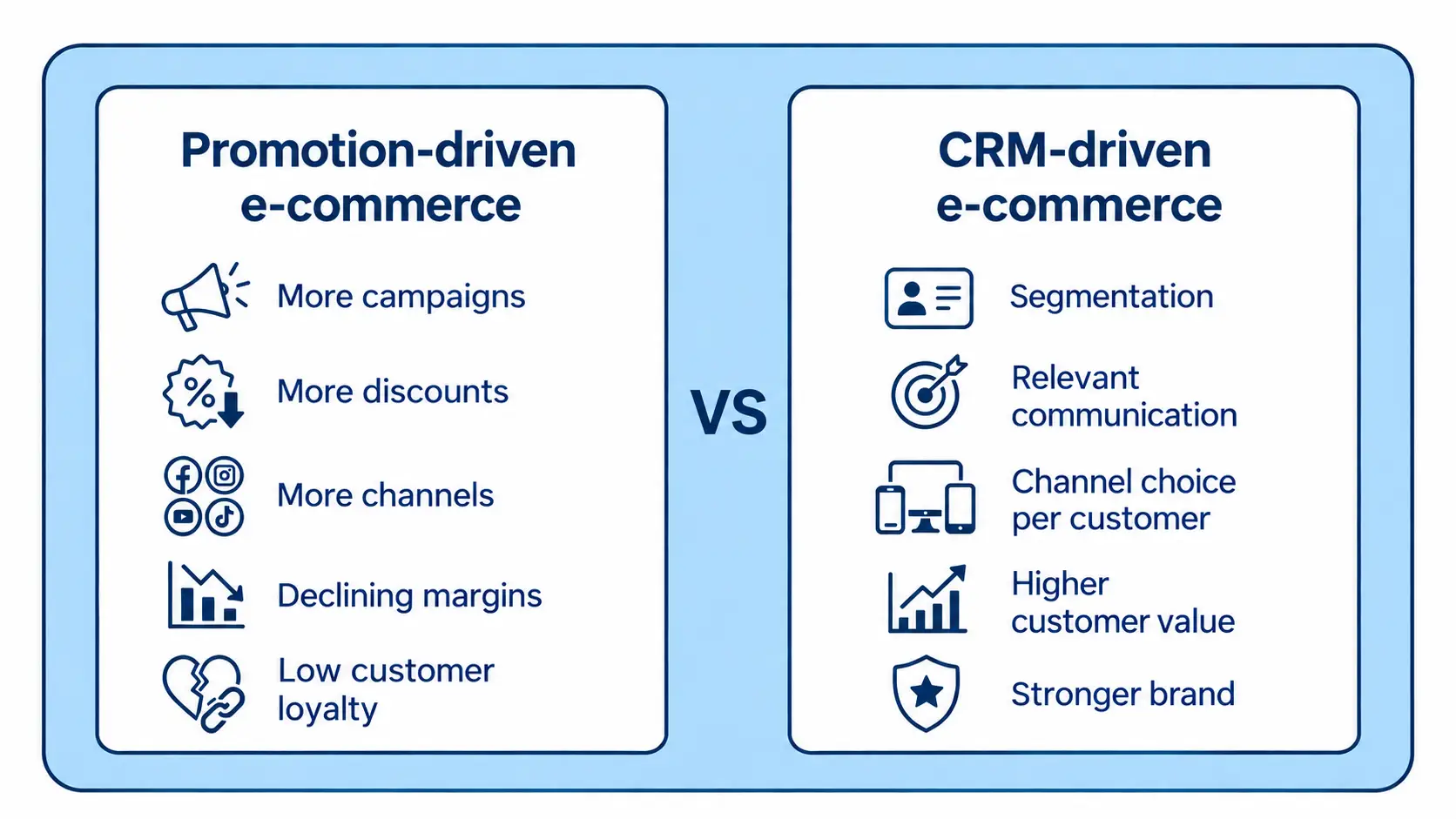
With this, Neleman shifted from promotion-driven to CRM-driven ecommerce: less discounting, better timing and a more relevant message. Looking ahead, Neleman wants to increase customer value further and bring retail and online into even better balance.
Sign up for a no-obligation online demo of our software.