Travel buying isn’t an instant thing. Most people don’t see a deal, whip out their card and book there and then. They browse, think, compare, procrastinate a bit, maybe sleep on it and that’s before you even know who they are.
Now, think about how many of those browsers you never hear from again. That’s where triggered email campaigns can make a real difference.
Instead of blasting everyone at the same time with the same message, triggered emails respond to what a browser’s behaviour on site.
They connect at the moment someone shows intent, gently nudges them along, and helps to convert interest into bookings.
Below are six automated campaigns every growing travel business should consider.
They’re practical, easy to set up once your systems are talking to each other, and designed to help you capture more bookings without increasing manual workload.

1. Say hello right – Welcome & preferences
When someone signs up for your emails or requests a brochure, that’s your chance to make a good first impression.
A welcome email (or a short series) should:
- Introduce who you are and what subscribers can expect.
- Ask a simple preference question such as what types of trips interest them, favourite destinations, how often they want to hear from you.
It doesn’t have to be complicated, just useful. Getting a few preference details early means you can start sending relevant content from the get-go.
And people are more likely to open emails that feel tailored to them. Triggered right after sign-up, this set up both relevance and engagement early on.
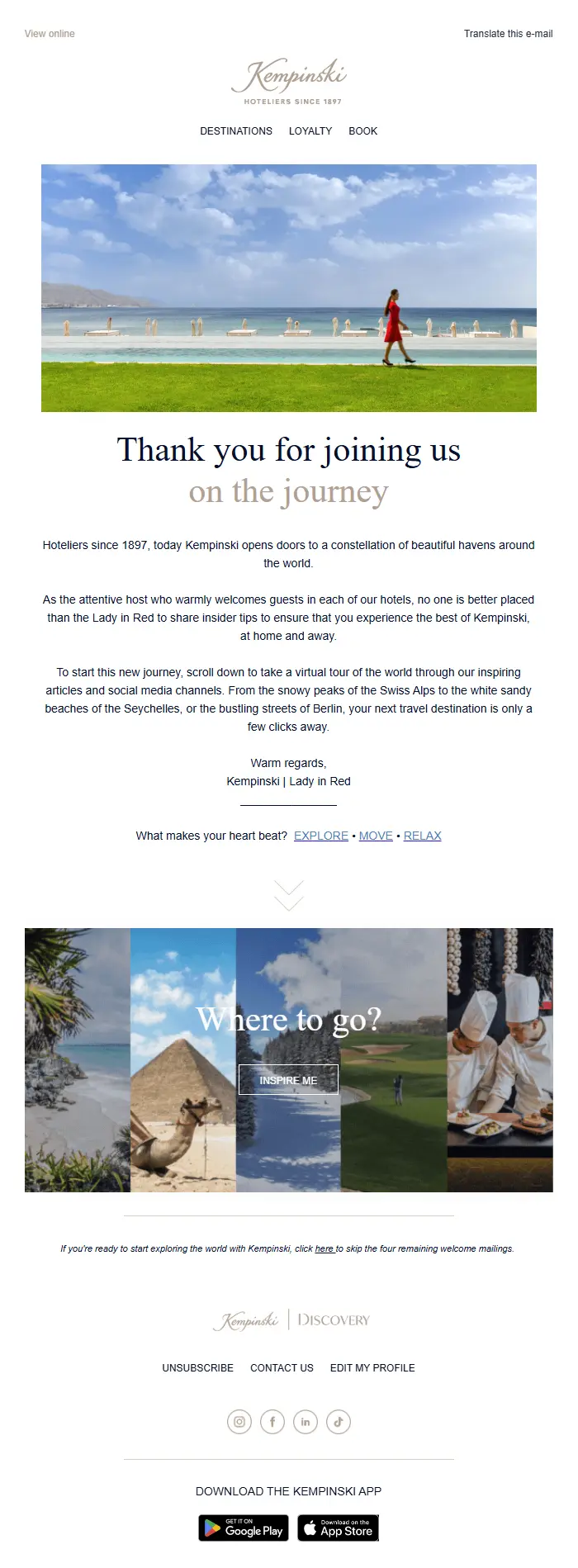
View the Kempinski case study
2. Reminder for abandoned searches & bookings
This one’s straightforward, but incredibly effective.
Let’s say someone starts a booking or searches for something specific – such as a Bali package or a luxury cruise – and then disappears. If your system captures that behaviour, you can trigger a reminder email.
These don’t need to be pushy. Something simple like:
“Still thinking about that trip to Seminyak? Here’s what you looked at, and here’s how to pick up where you left off.”
Timing matters here. Send it while the intent is still warm. Too late and they’ve probably moved on; too soon and it seems annoying. Experiment between 30mins, 1 or 2 hours for the first send with a follow-up the day after as default.
3. Suggested destinations based on browsing behaviour
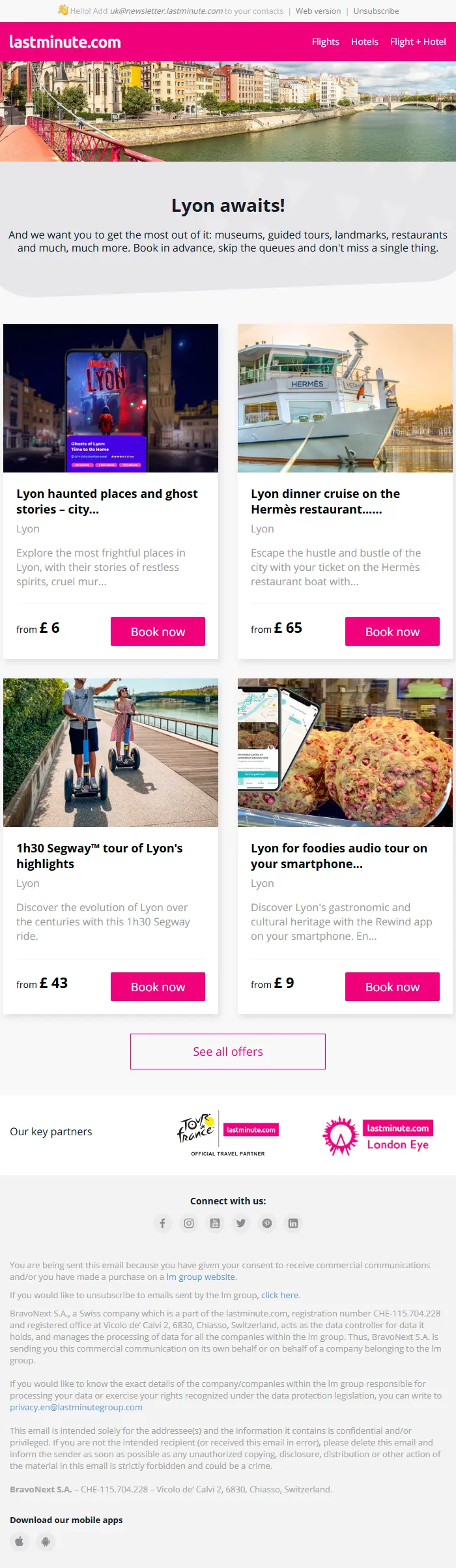
Triggered emails don’t always have to be about abandoned bookings. If someone spends time looking at specific destinations or types of trips, you can respond with relevant inspiration.
For instance:
- Someone checking out Greek islands could get a short note with similar options.
- Someone browsing family-friendly breaks might see a tailored list of summer ideas.
The trick is to be helpful, not prescriptive. Give them something that feels intuitive, relevant and helpful.

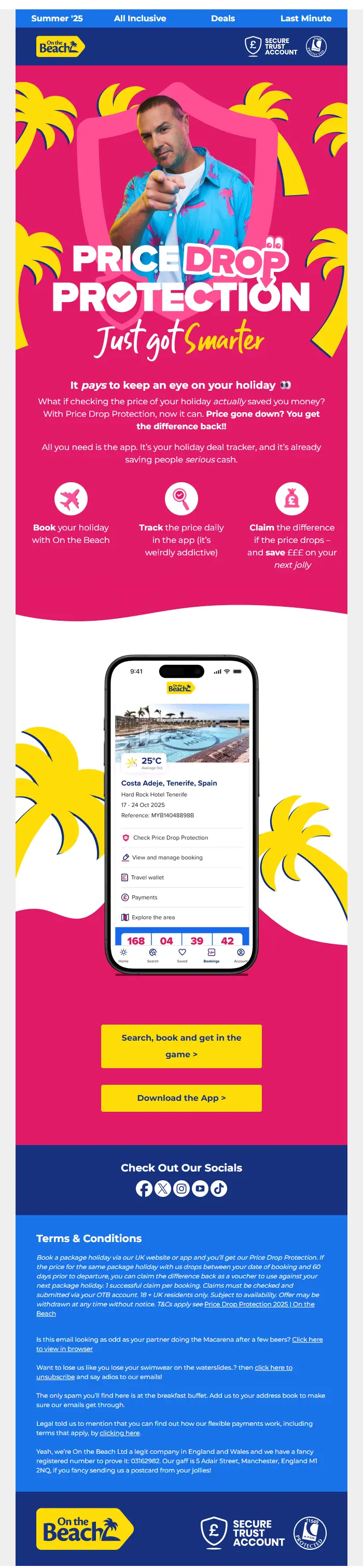
4. Price change & availability alerts
Travel pricing moves fast. A fare drop or last remaining cabin is exactly the kind of moment someone wants to know about! Especially if they were just browsing.
Set up alerts that trigger when:
- Prices drop on a previously viewed holiday
- A popular trip has limited availability
These are gold because they catch that subtle shift in urgency without you having to manually watch prices.
When done well, this kind of timely message can turn interest into action.
5. Pre-trip engagement, upsell & cross-sell opportunities
Once someone books, the goal shifts from acquisition to experience but that doesn’t mean revenue stops.
There’s often a long gap between purchase and departure. That window is valuable. Customers are excited, they’re planning, they’re imagining the trip. And that’s exactly when they’re most open to enhancing it.
A few weeks after booking, you can trigger practical emails that feel genuinely helpful:
- Travel prep tips tailored to their destination
- Packing reminders based on climate or trip type
- Visa or documentation reminders
These build trust and show you’re organised. But alongside that, there’s a clear opportunity to introduce relevant add-ons.
Think about what naturally complements the booking:
- Airport parking or lounge access
- Transfers
- Travel insurance
- Excursions and experiences
- Cabin upgrades or board upgrades
- Attraction passes
The key is timing and sequencing. You don’t need to push everything at once.
Spread offers across the pre-departure period. For example, send insurance information soon after booking while it’s still top of mind.
Introduce excursions closer to departure when they’re actively planning their itinerary.
Because these emails are triggered by a confirmed booking, they don’t feel random. They’re contextual and make sense.
And the commercial impact can be significant.
Even modest attachment rates across insurance, excursions or upgrades quickly add up, especially when you’re not relying on manual sales calls to drive them.
Automation means every booking gets the same opportunity to add value.
There’s also a cross-sell angle that often gets overlooked. If someone books a short European city break, that might not be the moment to sell them another city break, but it could be the perfect time to plant the seed for a winter sun escape later in the year.
Travel purchasing is cyclical, and automation helps you map those natural booking rhythms.
Done well, pre-departure automation improves customer experience and increases ancillary revenue. It’s all about offering useful additions at the moment they’re most relevant.
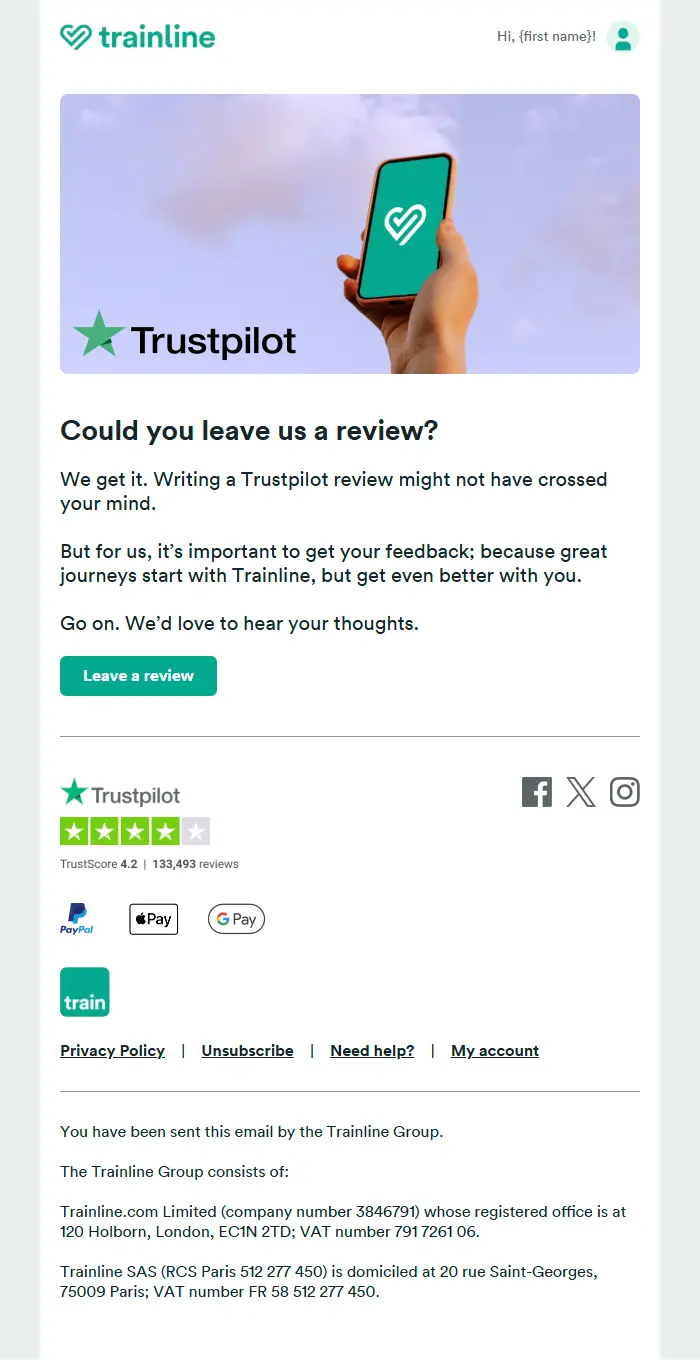
6. After the holiday: Reviews & re-engagement
A booking is not the end it’s just the start of your new found relationship. Trigger a follow-up a few days after someone returns:
- Thank them for booking with you
- Ask for feedback or a review
- Share suggestions for their next trip, maybe tied to what they just enjoyed
This kind of thoughtful marketing makes customers feel valued and sets you up for repeat bookings.
People who book once with you are far more likely to book again if they feel remembered.

How to implement triggered email campaigns without overwhelming your team
Triggered campaigns aren’t just about automation bells and whistles. Your main focus needs to be firmly on sending the right message at the right time, so your emails feel helpful.
If you’re new to automation, don’t try to launch all six campaigns at once. Start with the ones that align with your biggest leakage (like abandoned bookings) and build from there.
A clear data setup and good integration between your booking systems and marketing automation platform are where everything begins, so nail that first.
Done well, triggered emails feel personal even if they’re automated, and they can take you from sending generic blasts to having a conversation with your audience.
Where Spotler helps
Triggered campaigns rely on joined-up data. Your website activity, booking system, CRM and email platform all need to talk to each other. When they do, automation becomes straightforward.
When they don’t, even simple journeys become manual and time-consuming. That’s where having the right marketing automation platform makes a difference.
Spotler Marketing Cloud is built to help travel businesses connect their customer data and turn it into meaningful, timely communication.
Whether it’s abandoned booking reminders, pre-departure upsells or post-trip re-engagement, you can design journeys that respond to real customer actions, without needing a large technical team to manage it.
Want to know more how Spotler can help you? Feel free to contact us or book a demo.
Get more revenue from email marketing automation
Explore the possibilities of email automation for your business. Book a quick demo and we’ll help you get there.