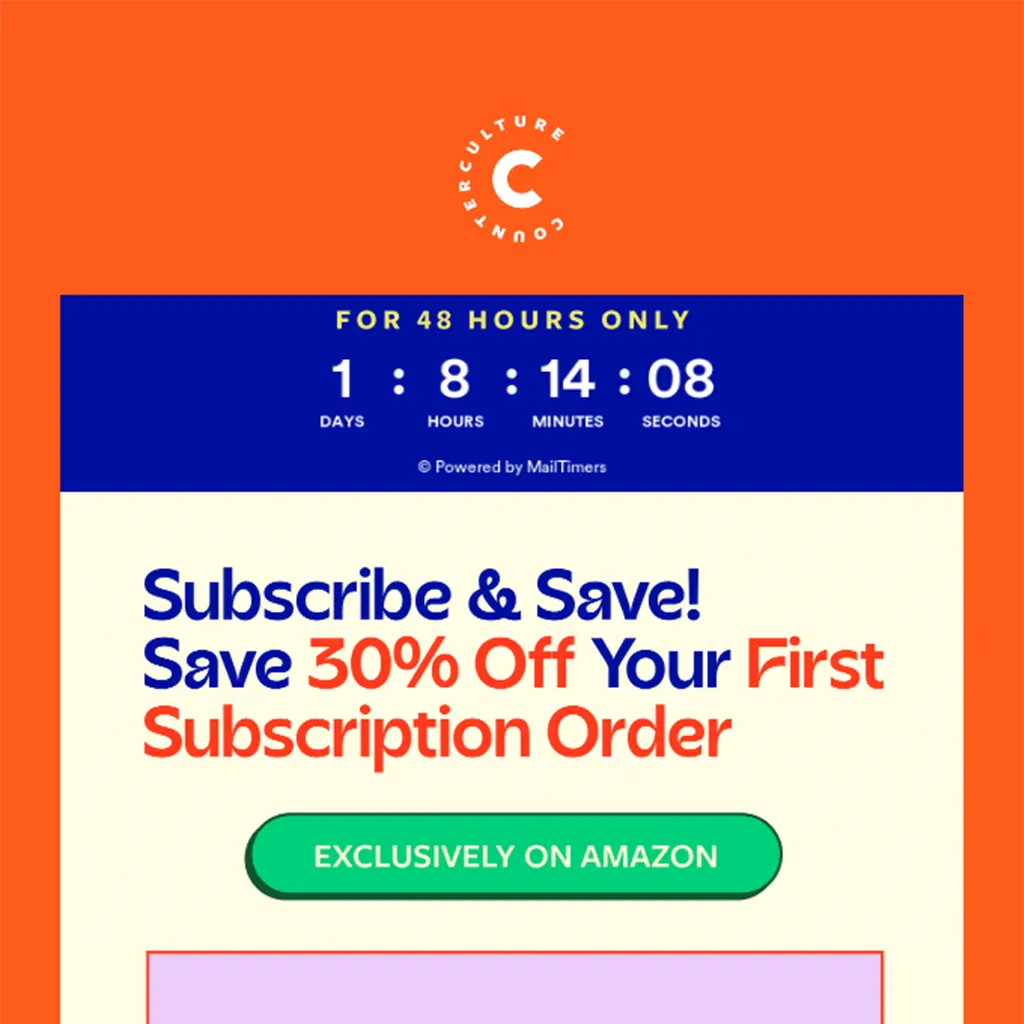
In a time-bound campaign, a countdown timer embedded in your marketing email or checkout page tells visitors exactly how many hours, minutes, and seconds are left. It creates a sense of urgency, nudging people to click, decide, and buy before time runs out.
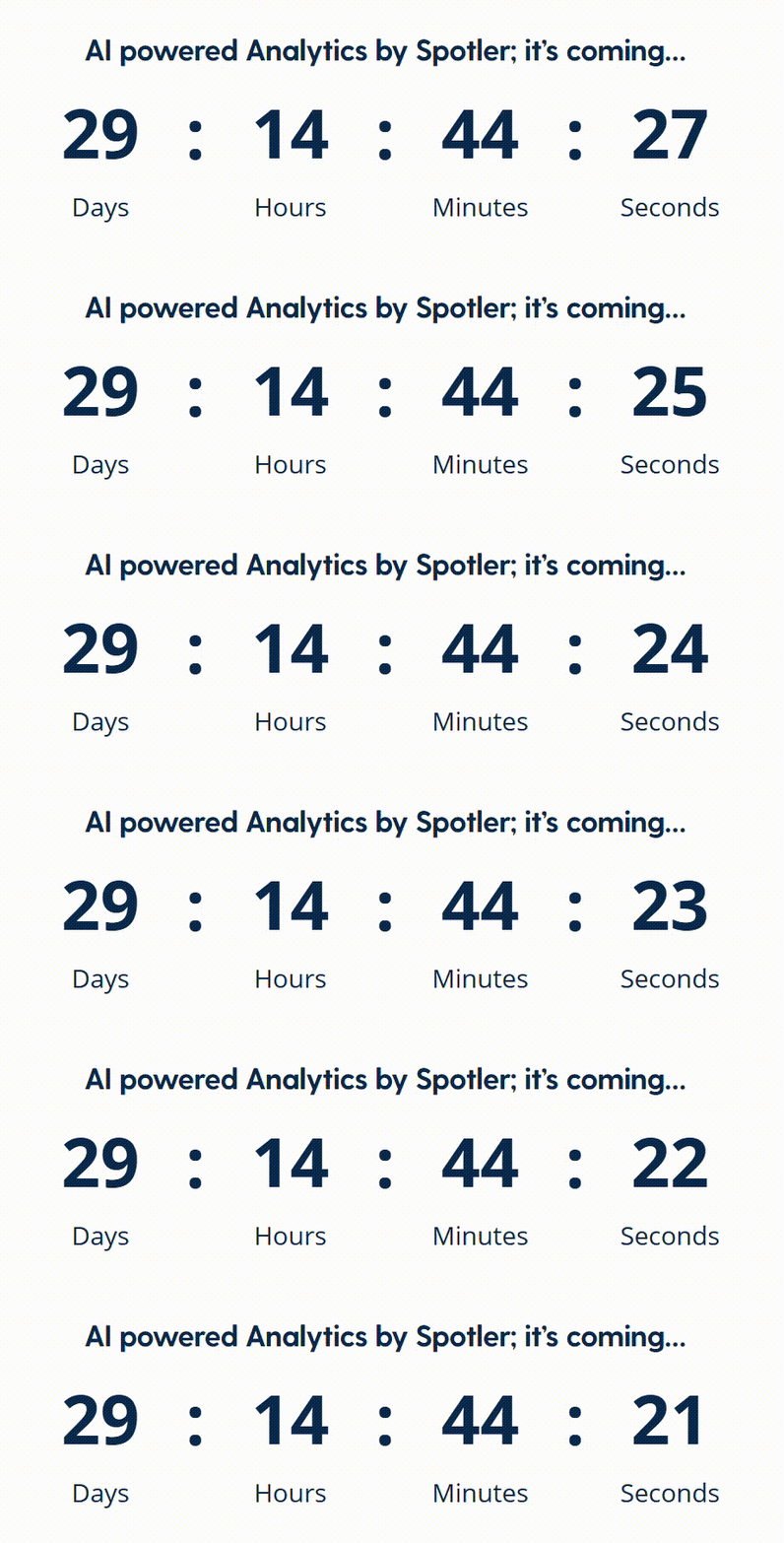
Behind the scenes, countdown timers are simple in concept but clever in execution. There are two main types: fixed and evergreen. A fixed countdown ticks down to a universal end date, such as “This sale ends on 31 March at 23:59.” Everyone sees the same clock. Evergreen timers are personalised. They track from the moment someone opens an email or lands on a page, such as “Your 24-hour offer starts now.” Every lead gets their countdown, tailored to their moment of entry.
This is where things get interesting for marketers using automation platforms or email service providers (ESPs). Evergreen timers rely on dynamic content and clever merge tags (personalisation tokens) to serve different timers to different users. On the other hand, fixed timers are easier to manage and useful for large-scale promotions with shared deadlines.
Countdown timers are common in e-commerce, SaaS campaigns, and event marketing. You’ll see them in abandoned cart flows (“Hurry, your basket expires in 10 minutes!”), product launch notifications, or early-bird pricing offers. They also appear in paid ads, pop-ups, email footers, and other media.
Why does a countdown timer work?