For any customer, the most desirable scenario is to do business with an organisation that delivers the same look and feel, the same prices, and the same terms and conditions across all channels. Offline and online give the exact same brand experience, and customers can always view their data in real time on a laptop, desktop, mobile, tablet, in-store, and in your app.
Suppose all the channels where your customers and prospects can find you are fully integrated, and that all the data comes from a single central database. In that case, you have an omnichannel marketing strategy. If you’re wondering whether developing such a strategy is useful, consider the findings from a study by Coresight Research and Salesforce.
Customers are front and centre once an omnichannel marketing strategy is established within your organisation. They recognise that you offer the same consistent presence everywhere. Whether they reach you through a Facebook post or approach you directly through your site, customers immediately understand that they are doing business with you. Chances are, this will help you retain customers for the long haul.
An omnichannel marketing strategy improves CLV, which is why 53% of European retailers implement one.
An omnichannel marketing strategy is one in which multiple channels are integrated. This also means that you have to pay attention to various channels. You may reach new customer segments. For 48% of European retailers, this is an important reason to develop an omnichannel marketing strategy.
With an omnichannel marketing strategy, you work from one central database. You’re past the point of storing data in different systems. Often, organisations use a Customer Data Platform to consolidate all data in one place. Working from a single system is much more effective than when different departments use customer data from different systems.
Managing data from a single system is less error-prone and provides a better overview of all available data. For example, this is important for your marketing, sales, and inventory management. An omnichannel marketing strategy gives you more control over this. You can immediately see which channels drive your conversions and what that means for your inventory.
Now that we’ve set out why an omnichannel marketing strategy is important, how do you go about setting up such a strategy? What should you pay attention to, and how do you go about it?
|
1st touchpoint Physical store |
Christine walks through Manchester’s Trafford Centre, and sees a beautiful dress hanging in the window of a clothes shop. |
|
2nd touchpoint Online store |
She didn’t have time to try on the dress, but she searches for it in the store’s online shop at home. She has doubts the dress will fit. |
|
3rd touchpoint Chatbot |
The online shop’s chatbot reassures her that she can return the dress at the Trafford Centre branch if it doesn’t fit. |
|
4th touchpoint Transaction |
Christine purchases the dress online and receives a confirmation email. |
|
5th touchpoint Delivery |
The dress is delivered two days later by Royal Mail. It fits perfectly and Christine is happy with it. |
|
6th touchpoint Social media |
Christine shares an Instagram story about the dress and tags the store. Her friends take notice. |
|
7th touchpoint Social media |
The retailer notices the tag and responds with a thank-you message on Instagram. |
|
8th touchpoint |
Five days later, Christine receives a follow-up email with suggestions for related items. |
The term “omnichannel” is quite jargon-y. Yet, from a customer’s perspective, we clearly understand what omnichannel means. We don’t think Christine’s first eight touchpoints with a retailer are crazy. It shows how we, as modern consumers, interact with companies.
However, an omnichannel marketing strategy is also increasingly expected in business relationships. A McKinsey survey found that 90% of B2B customers expect an omnichannel approach similar to what we, as modern B2C consumers, are used to. In short, you have high customer expectations to meet.
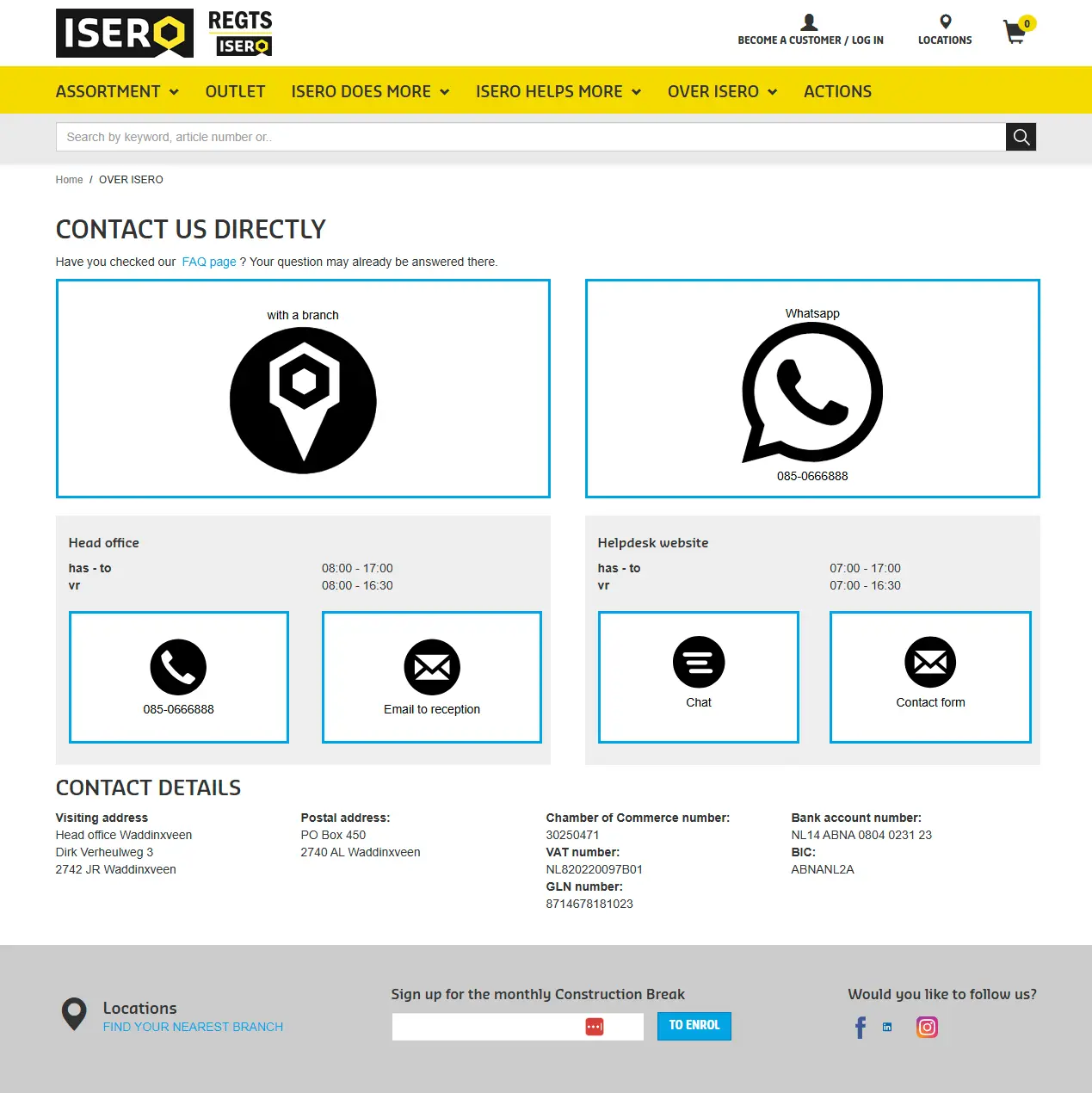
It seems like an obvious statement: be present where your customers are. That doesn’t just apply to Christine (B2C) starting a chat on the couch at home, but it certainly applies in B2B as well. Take a look at the extensive contact capabilities of wholesaler Isero:
Again, this seems obvious, yet this is where things sometimes go wrong. Make sure you respond promptly to customer questions or comments. How quickly “promptly” is depends on the channel. For example, it is acceptable if the response time of an email is a few business days, but for live chat, it
is important to respond as quickly as possible. Even better, communicate the expected response time.
Every client expects that you clearly state how you will dispatch goods and when they will be delivered. We live in an era of 24-hour delivery, Click-and-Collect, and even same-day delivery.
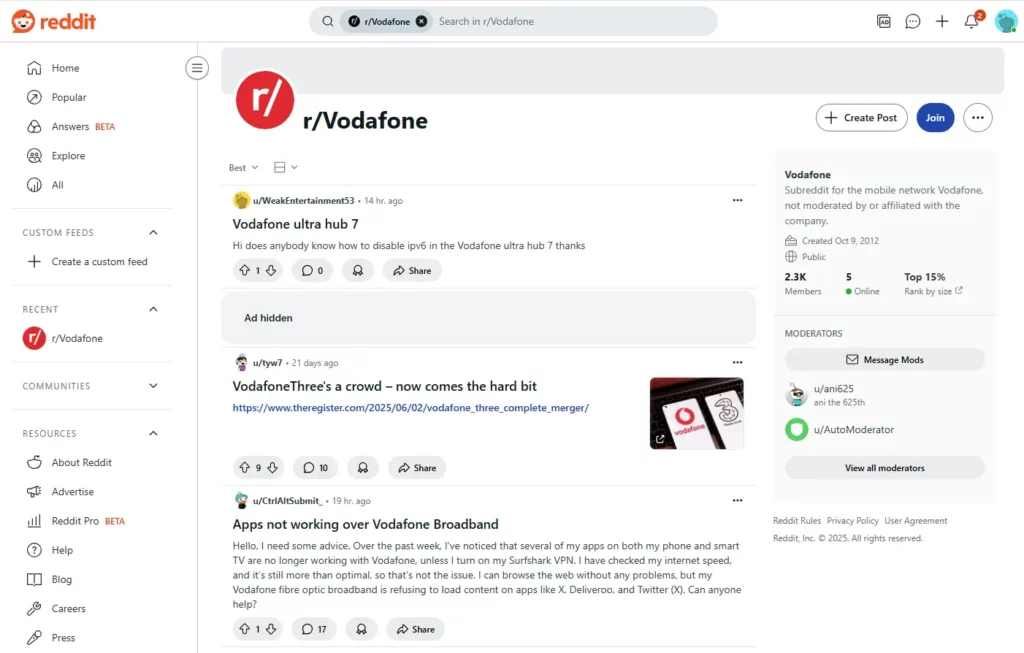
As consumers, we expect a lot. A consistent experience is more than using the same colours and logos everywhere. It also ensures that customer interactions don’t lead to different answers or solutions, or to them ending up elsewhere. Therefore, organisations often work with communities through their customer forums or public forums such as Reddit. And you also need to set up chatbots so that frequently asked questions get the same answers every time.
How do you ensure you have a presence anywhere, anytime that delivers accurate, responsive service, and that customers have a consistent experience with your brand and organisation? How can you meet your customers’ expectations, and what is involved in implementing an omnichannel marketing strategy?
Suppose Christine finds out at home that the dress she ordered doesn’t fit after all. Fortunately, she has received reassurance from the chatbot that she can exchange the dress at the Trafford Centre physical store. She walks in, but the store staff has no idea how to deal with online purchases. First, they have to find out if this exchange option really exists. Christine has to explain that a chatbot has informed her, and then a receipt is missing. Not much of a true omnichannel experience now!
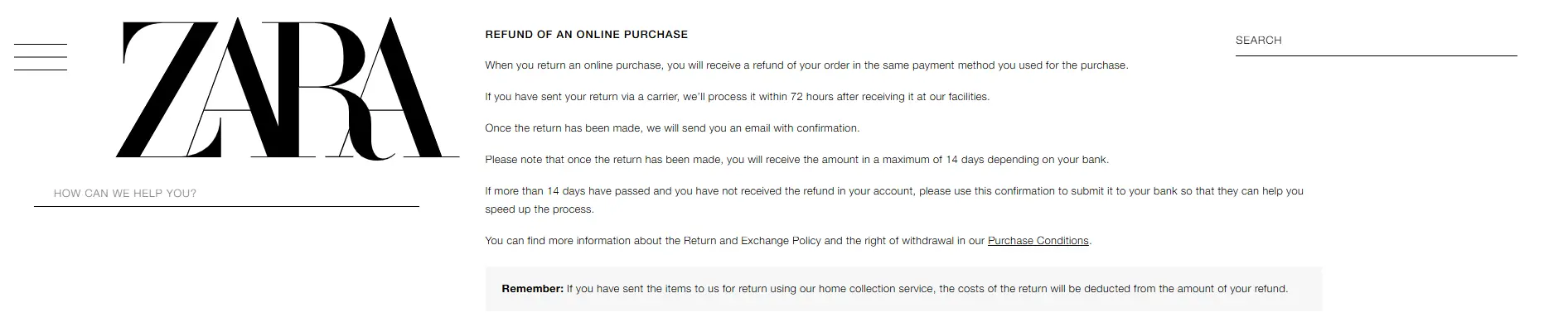
As you can see, it can be quite an involved process, depending on your chosen method. In Christine’s example, the chatbot should have directed her to the page listing all the important return information. This is how you should set up your own virtual assistant.
Store personnel should know what the website instructs customers to do. Furthermore, it would be handy for store personnel if the checkout system showed the online order information.
It would be a bad look for the marketing department to email Christine after five days and say, “How are you enjoying your new dress?” That message will no longer be needed once Christine returns the dress. If Christine receives such a marketing email two days after returning the dress, you’ve hit the moment when the desired omnichannel experience is no longer realised. As a final indignity, Christine posts an Instagram story ridiculing the whole experience.
Data must be available in one central location for an actual omnichannel experience. Otherwise, it gets tricky. For that reason, organisations like to work with a Customer Data Platform.
Want to know everything you need to know about CDPs? We’ve written a guide covering the following topics:
Not all customers have the same preferred channel. Christine’s enjoyment of starting a chat through the website may be the most natural thing for her, but that is not true for everyone.
Furthermore, contact can also be very place and time-specific. The earlier example of wholesaler Isero displays this well. Their contact options are as follows: FAQ, local branch, phone, head office email, live chat, WhatsApp, mail, contact form, and dedicated help desk.
The channels you use depend on your customers and prospects. A B2B customer may prefer to call the local branch directly, while a B2C customer wants to read your latest brochure via WhatsApp. Citizens also like it when their local government is easily accessible and available through different channels.
In any omnichannel marketing strategy, you must deliver the entire cycle from order confirmation, invoice information, to the-deliverer-is-on-the-road email on time and in the right corporate style. The most obvious example is Amazon.
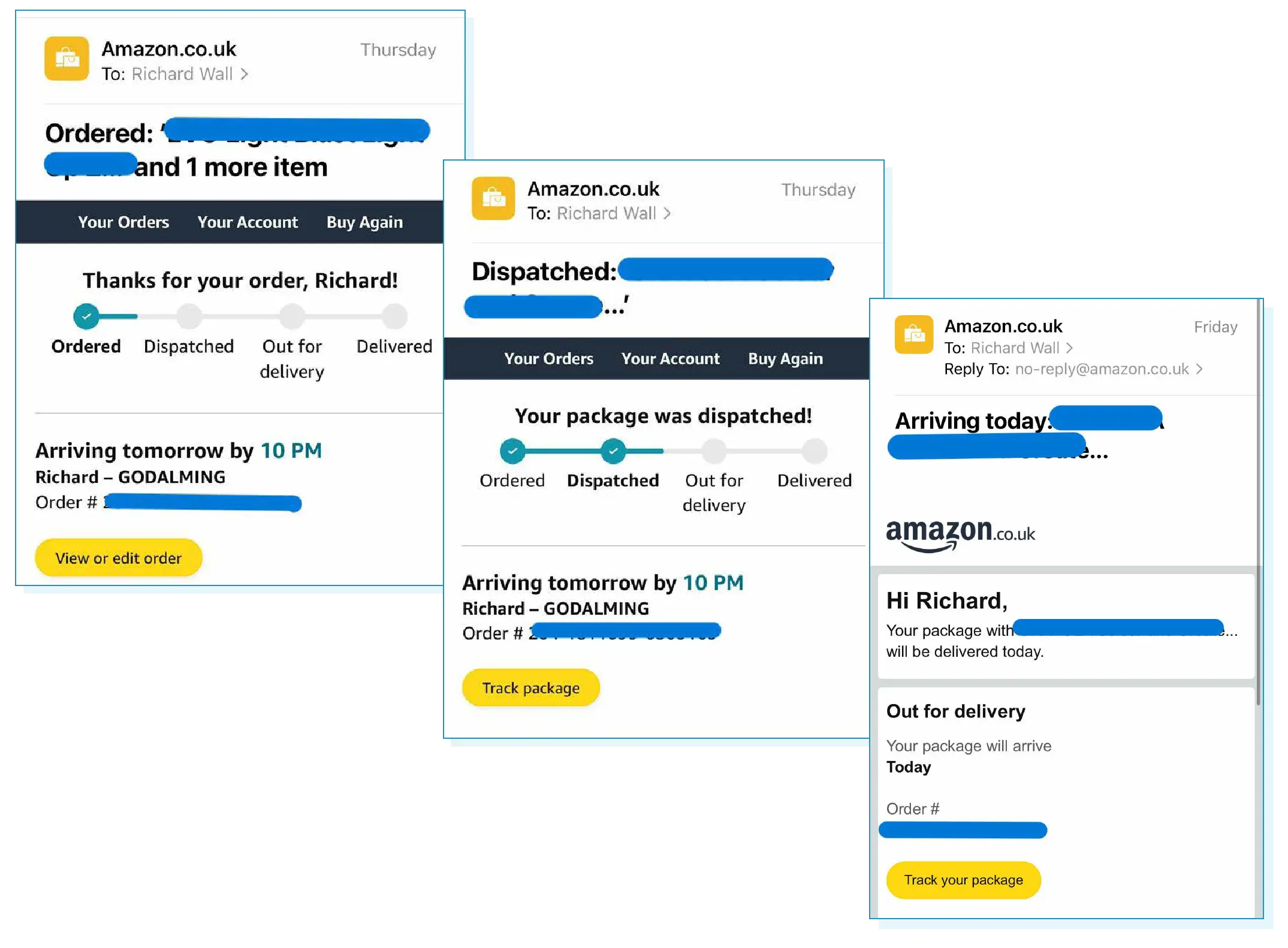
If you want to make sure that all your transactional emails are properly branded, Spotler leverages specialised software designed for that purpose.
Want to know everything about transactional emails? We’ve written a guide covering the following topics:
As an organisation, it is crucial to monitor the world around you. What is being said or shared about you, what is happening with competitors, and what is happening in the wider market? This way, you know what is happening with your target group and keep a grip on your reputation.
Within your organisation, you must know precisely who is responsible for what when it comes to following up customer messages, especially if these come in via Facebook, Instagram, WhatsApp, or any other communication tool you use. It is convenient if you can collaborate with multiple colleagues within your marketing software on incoming calls and comments, so that you can automatically send messages to the right teams or colleagues and continue tracking your message flows.
For an omnichannel marketing strategy, a professional conversational messaging platform is essential. Properly monitoring what is being said about you can create a positive brand experience, both for positive and negative comments.
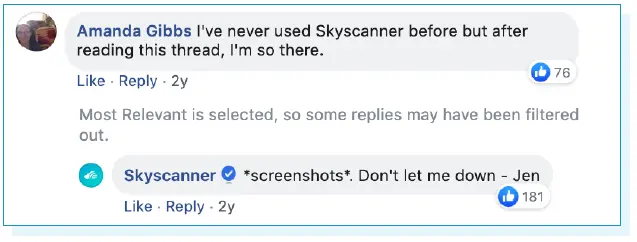
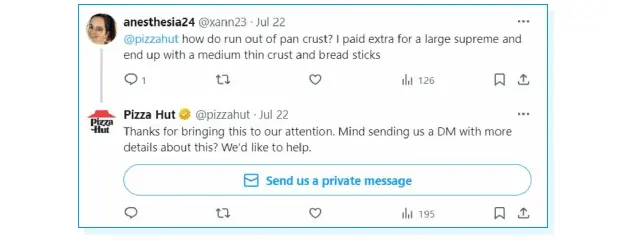
Generative AI can be used today to optimise your chatbot, social posts, and mailings. Your marketing software should obviously enable it, but AI has a significant role to play in an omnichannel marketing strategy.
This allows your chatbot to provide answers based on information on your site. Through the AI module, you can designate the correct URLs very easily. As a result, the chatbot always generates the correct answers. You save a lot of time because you no longer have to change your chatbot’s dialogues when information changes. You synchronise the chatbot with the push of a button. This allows you to automate much of your chatbot’s responses. Your chatbot always stays up-to-date, and your customers always receive the most current and correct information. This is key for an omnichannel marketing strategy.
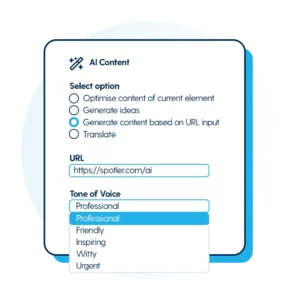
Generative AI is also beneficial for content creation. Make sure your software is capable of helping you create social posts. Make sure you can tailor them to be channel-specific, so that the AI module generates text suggestions and knows how to adhere to your tone of voice. Using AI to create on-brand and on-tone email content blocks saves you time. Again, it is important that you can enter URLs, specify the appropriate text length, and select the desired tone of voice.
Things like text length and tone of voice determine your brand experience. AI helps you keep a consistent line in this, which fits well with an omnichannel marketing strategy.
In Christine’s example, her purchase process automatically sent out an email with cross- and upsell opportunities five days after her purchase. You’ve already read that you should use a Customer Data Platform to avoid missing customer interactions and triggering an automated campaign based on outdated information. But if you get it right, then the right email at the right time for an omnichannel marketing strategy is crucial.
Spotler has the right software for all touchpoints in your omnichannel marketing strategy. Whether you need just one solution or a full suite, our products work perfectly on their own or together, so you can build your omnichannel marketing strategy step by step or all at once. We are happy to help you with:
| All data from one central database | Combine all the information from your visitors and customers. This provides you with well-filled profiles that form the basis for all your campaigns. |
| Social publishing & monitoring | Are your customers letting you hear from them through social media, WhatsApp, messaging channels, live chat, review sites and forums? Keep track by bringing all online communications together in one clear dashboard. |
| Comprehensive messaging platform | WhatsApp for Business, Instagram DM or Facebook Messenger, all conveniently managed from one powerful messaging platform. Want to know more? Visit our site. |
| User-friendly chatbots | Our chatbots help you quickly and accurately capture common questions. This leaves your employees’ hands free for more complex questions. |
| Improved transactional emails | Spotler’s transactional email solution has a rock-solid reputation and highly reliable API. Inbox placement is as high as 99.8%. Send your transactional emails with our software. |
| AI modules that make a difference | Spotler puts AI where you’ll actually use it. We use Generative, Conversational and Predictive AI. Read all about our vision on AI and the many applications of our AI modules. |
| Advanced email automations | Spotler has multiple solutions for sending great mailings and automated campaigns. Check out the many options on our product pages. |
Schedule a demo at a time that suits you – and our experts will help you achieve more with marketing.