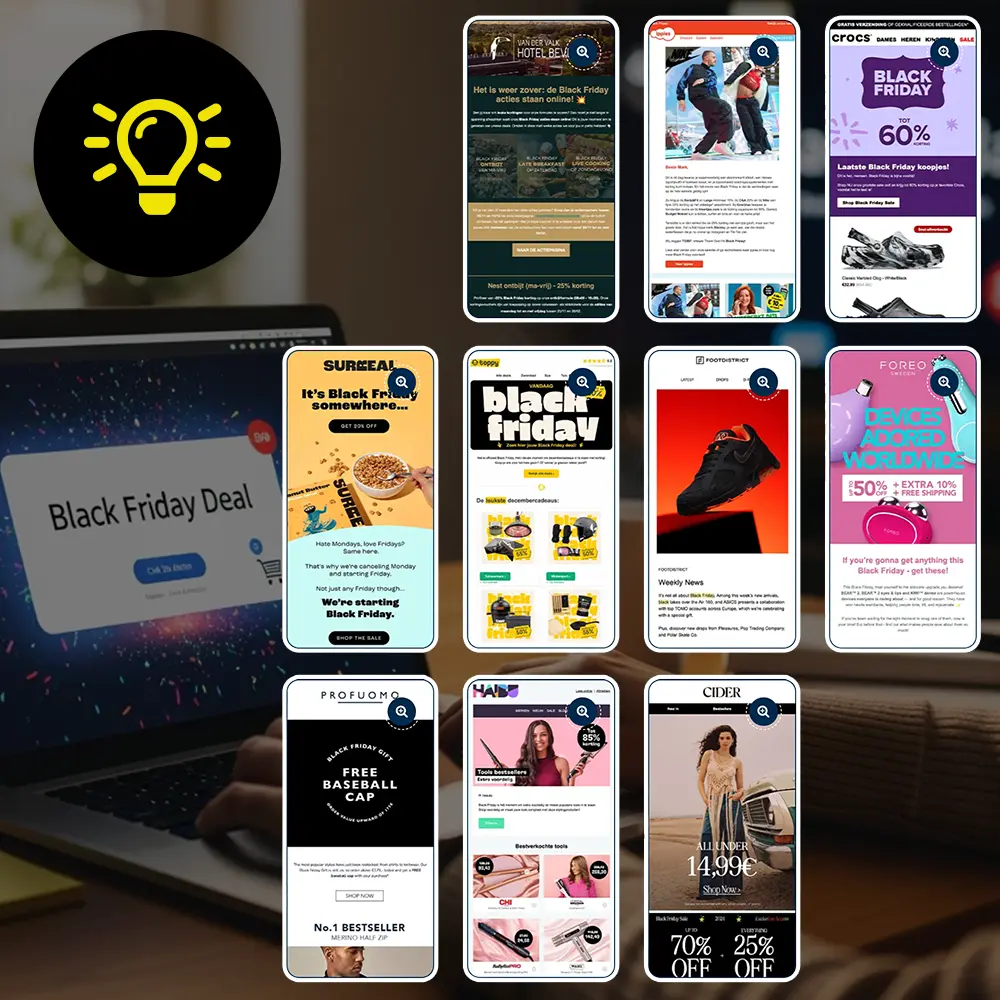
Black Friday changes how people shop. Adobe’s 2025 data found that when the discounts were strong enough, shoppers were more willing to trade up rather than simply buy the cheapest option. Across November and December, the share of higher-priced products sold was 14% higher than during the rest of the year.
But Black Friday also brings in customers who may behave very differently from your usual audience. Some are shopping for gifts. Others are deal hunting, comparing several retailers or buying from you for the first time.
Treat them exactly like your regular customers and your follow-up can quickly become irrelevant.
The better approach is to understand why they bought, then use that behaviour to shape what happens next.
Segment your BFCM customers for better targeting
When new customers place an order during BFCM, keep them in a separate segment. Include details like purchase type and origin (social, email, SEO) to inform your follow-up strategy.
Keep useful context alongside the purchase, such as whether they were a new or existing customer, what they bought, whether the order looks like a gift, the discount used and the channel that brought them in.
You don’t need dozens of segments. You need enough information to avoid treating every Black Friday buyer as if they arrived for the same reason.
Not all holiday shoppers behave the same. For example, a grandparent buying a gift isn’t looking for your latest game launch updates.
Recognising if someone shops for themselves or others helps you send the right post-campaign follow-up – like gift ideas or birthday reminders, rather than irrelevant product pitches.
There’s another behaviour change worth watching too. More customers are arriving after using AI tools to research products, compare options and narrow down their choices. That means some Black Friday visitors may reach your site further along in the decision process than your usual customer journey assumes.

Automate tailored messages that add value
Use automated workflows designed just for BFCM customers:
Warm welcome for seasonal buyers
Send a post-purchase thank-you message that stands out from your usual welcome series. Follow up with content that helps them get more from the purchase, such as setup advice, care tips, complementary products or useful gift information.
Tailor based on buyer intent
Gift buyer? Follow up with related gift ideas or a reminder around the same time next year.
Self-purchaser? Recommend products that genuinely complement what they bought.
Re-engage after the holidays
Not everyone will come back straight away. Use engagement and purchase behaviour to identify customers who are still interested and those who have gone quiet.
A gentle nudge a few months later, such as a new offer or example of how others use their purchase, can help you win them back without being pushy.
Time your messages thoughtfully
Timing is vital in post-Black-Friday communication. If a product has a natural follow-up cycle, say a one-year mark, avoid sending that reminder during next year’s peak. Instead, send it earlier for better visibility.
For customers who haven’t made a repeat purchase after six months, test a re-engagement message based on something relevant to their original purchase before reaching for another discount.
Just be mindful not to erode your margins chasing discount-only buyers.
Learn from their behaviour to improve strategy
Track how new Black Friday customers respond post-purchase. Do they come back? What do they buy?
If certain channels attract one-time buyers only, rethink your budget. But if some promotions create loyalty, invest more in those tactics for next year.
Protect your sender reputation by avoiding over-messaging
Not every BFCM customer becomes a regular, and that’s okay. Avoid bombarding them with irrelevant emails.
Keep them in their own segment and remove unengaged contacts from your standard campaign sends – especially outside the holiday season – to preserve your deliverability and sender reputation.
Why a Thoughtful Approach Wins
Black Friday shoppers are a big opportunity but only if you treat them smartly.
Not every Black Friday customer is going to become a loyal customer. Some came for the discount. Some bought a one-off gift. Some may not need what you sell again for months.
The useful bit is learning the difference.
If you understand why someone bought and what they do afterwards, you can stop treating Black Friday buyers as one big segment and start giving the right customers a reason to come back.
Black Friday Marketing Hub
No need to stress about your Black Friday campaign. We have a complete toolkit ready for you with all the help you will need. Stress less. Sell more. Start with your Black Friday campaign now!