



AI personalisation uses machine learning to decide, for each person, which message, product, offer or moment is most likely to be relevant. It learns from behaviour and purchase data rather than from rules a marketer writes by hand. That lets it personalise for thousands of people at once and adjust as their behaviour changes.
This article explains how that works in practice. It covers the data AI needs, the segmentation techniques and recommendation engines behind it, dynamic and real-time content, and how to tell whether it pays off. For a broader introduction to AI in marketing, start with the power of AI marketing.
Every AI personalisation system follows the same four steps, whatever the channel:
The fourth step is what separates AI from rule-based personalisation. A rule stays the same until someone changes it. A model keeps learning from every response.
Mostly data you already hold. The most useful signals are first-party: what customers told you, what they did on your site and in your emails, and what they bought. Our article on first-party versus third-party data explains why first-party data has become the foundation.
Quality matters more than quantity. Duplicate profiles, missing purchase history or disconnected systems lead to confident but wrong recommendations. Bot activity matters too: automated email opens and clicks can make uninterested contacts look engaged, as our guide on spotting bot opens and clicks explains.
AI segmentation groups people by what they are likely to do, not only by who they are. These are the techniques you will meet most often:
Recency, frequency and monetary value (RFM) segmentation is a useful, non-AI baseline. If a predictive model cannot beat a simple RFM split on your own data, it is not earning its keep. Our guides explain how predictive AI works and how to use it for customer lifetime value optimisation.
Recommendation engines predict which products or content a person is most likely to want. Three approaches do most of the work:
Recommendations increase sales because they shorten the path to the right product and surface items people would not have found. They also have known weak spots. New visitors and new products have no history- the so-called cold-start problem- so a good engine falls back on bestsellers or trending items. Recommending what someone just bought is a classic mistake, and a sign that systems aren’t sharing purchase data.
Measure recommendations on click-through from recommendation slots, the share of revenue they influence and their effect on average order value. Ideally, compare against a control group that sees bestsellers instead. Our article on searchandising shows how search and recommendations work together on site.
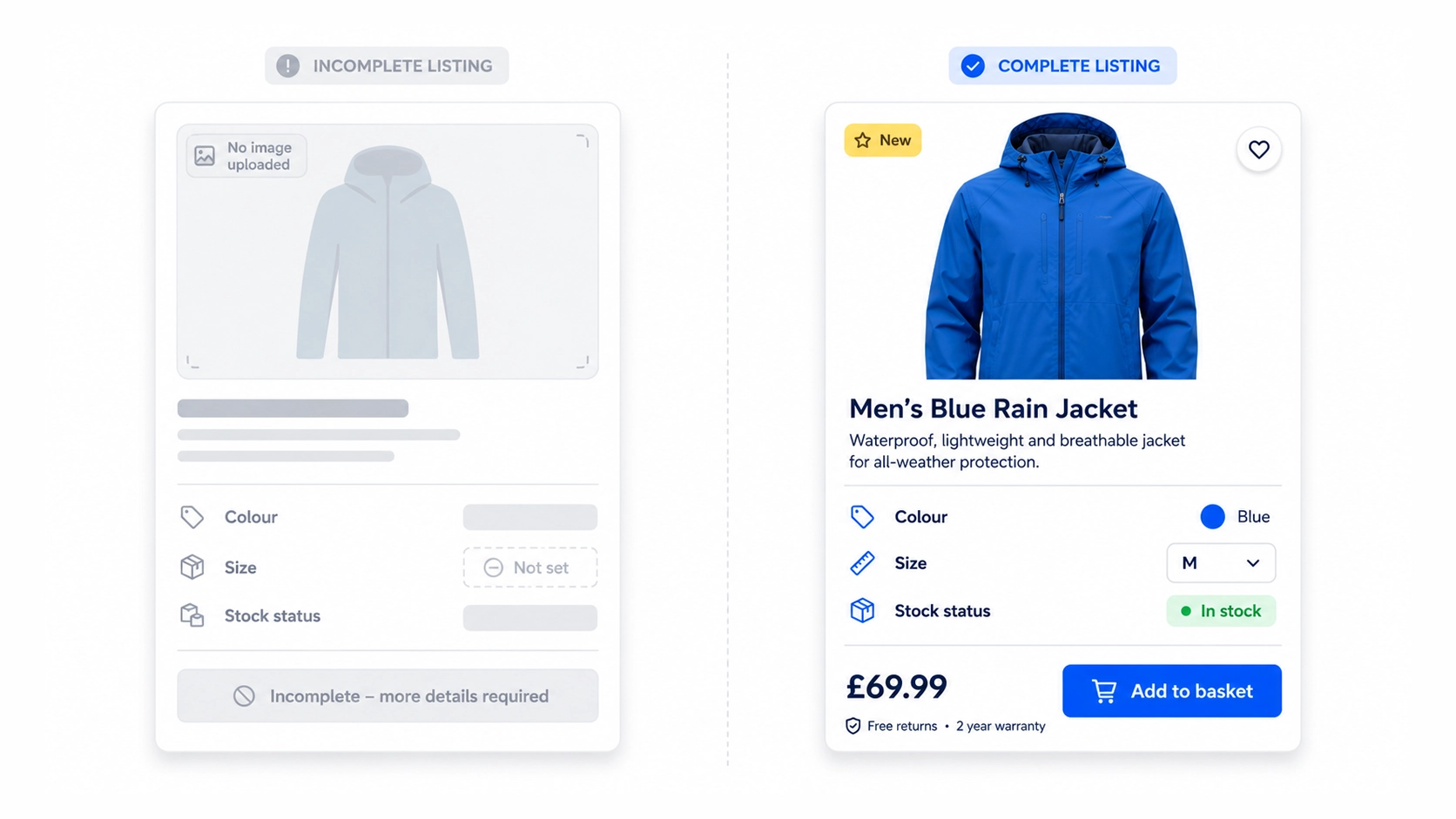
Dynamic content optimisation means building an email or web page from blocks that change per person, with AI choosing which version each person sees. A hero image, an offer, a product row or a headline can each have several variants.
It differs from a classic A/B test. An A/B test splits traffic evenly, waits for a winner and then sends everyone the winner. Dynamic optimisation shifts traffic towards better-performing variants as results come in, and can pick different winners for different segments. You lose less to underperforming versions while you learn.
Keep the variants meaningfully different, and keep enough people on each to learn from. Ten near-identical headlines teach a model very little.
Real-time personalisation reacts to what someone is doing now, within the same visit or session. A visitor who reads three articles about one product category sees that category featured on the homepage. A shopper who adds an item to the basket sees accessories that fit it. An email opened tonight shows tonight’s stock and prices, not this morning’s.
It needs event data that flows quickly between systems and decisions made in milliseconds. That is worth the effort on high-traffic websites and in ecommerce. For a B2B site with a long sales cycle, near-real-time updates usually deliver most of the value with far less complexity. Daily scores feeding the next email are often enough.
Our guide how we turned simple data into an AI-powered email shows a worked example.
By deciding at the customer level, not the channel level. A unified profile lets AI choose the next best action across email, website, WhatsApp and ads. It can send the replenishment reminder by email, show the accessory on site and stop the retargeting ad for the product someone just bought.
That requires one view of each customer, which is what a customer data platform provides. Without it, each channel personalises on its own partial data, and customers notice the gaps. Our guide on enhancing the customer journey with data-driven personalisation covers the journey side, and our article on hyper-personalisation in retail covers the retail benefits.
Compare it with what would have happened without it. Keep a small, random control group that receives the non-personalised version, and measure the difference in conversions, revenue per recipient or retention. That difference, the incremental lift, is the honest measure.
Look at results per segment as well as overall. Personalisation can lift results for engaged customers while doing nothing for new ones. And give models time: their value builds over several campaigns as they learn.
Less than you might think for simple uses. Recommendations based on product similarity and bestsellers work from day one. Predictive scores such as churn or lifetime value need enough purchase history to learn from, typically at least several months of transactions.
Yes, with conditions. Marketing personalisation is profiling, so you need a lawful basis and must explain it clearly. Under GDPR, people have an absolute right to object to profiling for direct marketing, and you must stop when they do.
Spotler Activate brings customer data into one profile, so every channel personalises on the same view. Its predictive AI add-on groups customers by predicted lifetime value in dynamic segments. Search and merchandising help shoppers find products faster with smart recommendations, and email marketing automation turns segments and product data into personalised emails. Our article on customer loyalty and AI shows where it leads. Book a demo to see it with your own data



