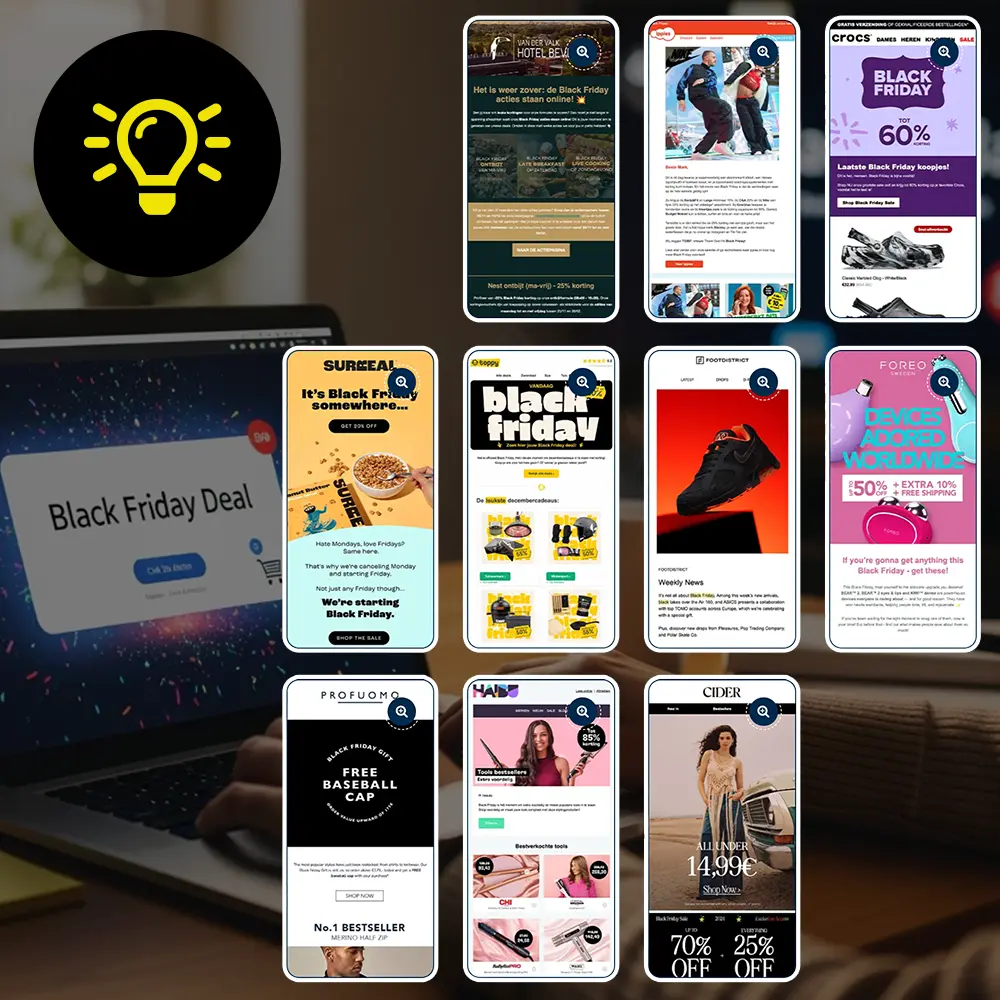
Black Friday is no longer just that one day when everyone storms stores and websites en masse. It has become a much longer shopping season, with customers researching earlier, comparing more and using new tools to decide what represents a genuinely good deal.
As a marketer, that means your Black Friday planning needs to keep changing too. Here are five trends worth paying attention to for Black Friday 2026.
Not on Friday, but beforehand: this is how we shop now
The clue is in the name, right? Black Friday is one particular Friday.
Not anymore.
Black Friday was still the UK’s biggest online shopping day of 2025, with £1.16 billion spent online. But shoppers weren’t waiting for one day to start buying. Cyber Weekend generated £3.8 billion, while online spending across November and December reached a record £26.9 billion.
Black Friday has become less of a day and more of a shopping period. Retailers start promotions earlier, customers start researching earlier and buying decisions are spread across several weeks.

Personalisation is no longer a luxury, but a must
McKinsey research shows that 71% of consumers expect companies to tailor their communications to personal preferences and behaviour, and 76% become frustrated when this doesn’t happen.
This emphasises that personalised and well-timed messages not only offer a better customer experience but also have a real impact on the effectiveness of your marketing campaigns.
Brands that use personalisation effectively can see stronger engagement, conversion and customer loyalty. Fortunately, small steps can make a big difference.
For example, segment customers based on previous purchases, interests, or demographics. This way, you can send offers and content that truly resonate with your customers.
With our CDP, you can build complete, 360-degree customer profiles. This gives you a single, central overview of all your customer data and allows you to create intelligent segmentations.
Combined with email marketing, you can easily translate these insights into automated campaigns. This way, you always send the right message to the right person, increasing open and click rates and boosting customer satisfaction.
Black Friday? No, Green Friday
According to BusinessWaste.co.uk, Black Friday creates 700,000 tonnes of cardboard and plastic waste, and an extra 429,000 tonnes of greenhouse gas.
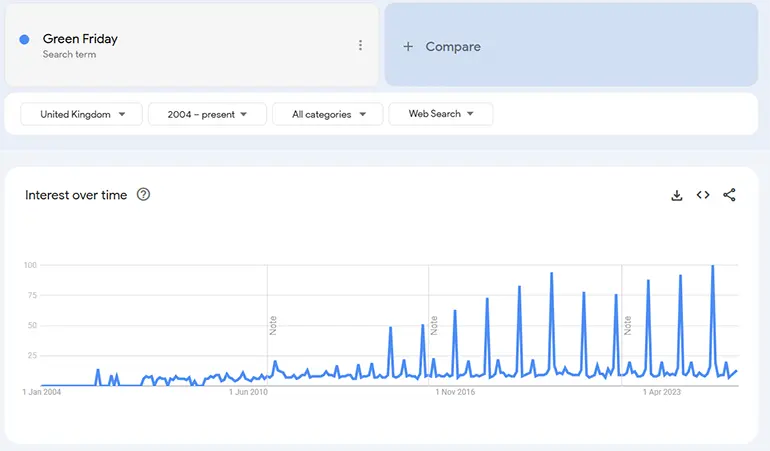
Combined with growing consumer scepticism about whether Black Friday deals really represent savings, the eco-friendly alternative Green Friday has been gaining momentum:
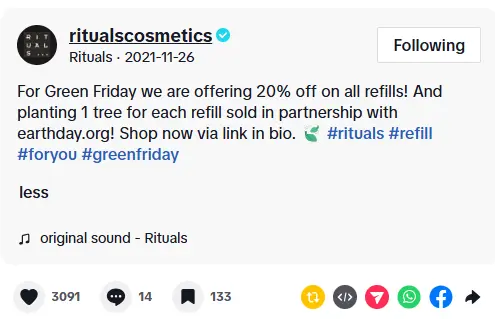
A good example of how brands can lean into this trend is Rituals, who hit an eco-friendly double by both promoting refills and planting a tree for each sale.

By incorporating sustainability into your marketing, you demonstrate your commitment to adapting to your customers’ needs. This not only strengthens your brand but also attracts conscious shoppers.
Social & chat are becoming increasingly important
Mobile deserves particular attention. During the 2025 holiday period, 61.5% of UK online spending happened on mobile devices, accounting for £16.5 billion in sales.
More consumers are discovering and buying products through social platforms such as Instagram, TikTok, Facebook and YouTube.
Preferences differ by generation, with younger shoppers, such as Gen Z, more likely to choose Instagram and TikTok, while Millennials and older generations are more likely to shop via Facebook and YouTube. Even though Gen X and Baby Boomers shop less often on social media , when they do, they mostly use Facebook as their channel (source: DHL).
Tip: Optimise your campaigns for mobile and social media, integrate shoppable content and live shopping where possible, to maximise your impact during Black Friday 2026. Australian fashion brand That’s So Fetch put out TikTok content that’s unpolished and shot in first-person view, rather than a slick branded video:

AI is changing the customer before they reach you
AI’s role in shopping has moved well beyond helping marketers optimise campaigns.
Customers are now using tools such as ChatGPT and Gemini themselves to research products, compare options and hunt for deals before they visit a retailer’s website.
Adobe found that traffic from AI sources to UK retail websites increased by 329% during the 2025 holiday period compared with the previous year. While AI still represents a relatively small proportion of overall ecommerce traffic, the direction is clear.
That changes the Black Friday journey. A customer arriving from an AI tool may already understand the products available, have compared alternatives and have a much clearer idea of what they want.
For marketers, the challenge isn’t simply using AI to send campaigns. It’s making sure your product information, offers, website experience and customer journeys work for shoppers who are increasingly using AI before they reach you.
What does this mean to you?
Black Friday is no longer a sprint, but a campaign that develops over several weeks. Customers are researching earlier, shopping across more channels and increasingly using AI to help them decide what to buy.
The opportunity for marketers is to use the data they already have to make those journeys more relevant, from the first message through to the final purchase.
Black Friday Marketing Hub
No need to stress about your Black Friday campaign. We have a complete toolkit ready for you with all the help you will need. Stress less. Sell more. Start with your Black Friday campaign now!