Like email and text messaging, WhatsApp has become an indispensable communication channel for organisations. With 2.7 billion users worldwide, chances are that your clients are also using WhatsApp.
Besides the importance of this channel for fast and effective customer service, you can also use WhatsApp as a means by which you can bring newsletters and other marketing and communication content to your customers’ attention in an excellent way. In this paper, we look at 5 inspiring ways you can do this.
Although WhatsApp basically needs no introduction anymore, a quick review of the origins of the tooling and its current capabilities. After all, why did we start WhatsApping each other instead of emailing or texting?
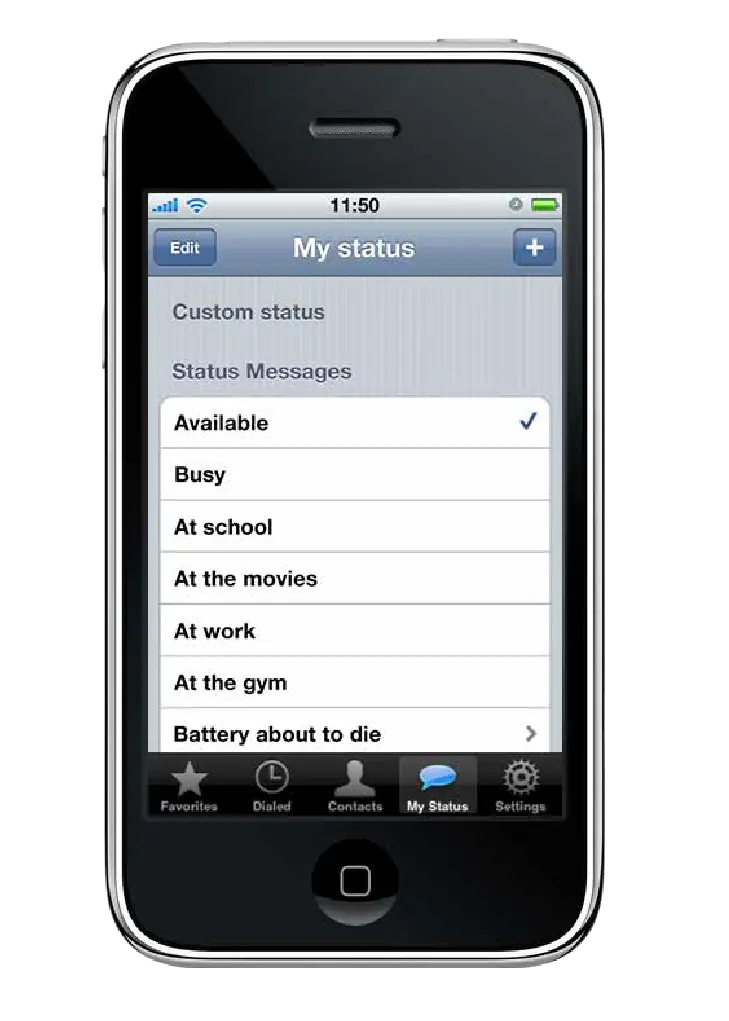
WhatsApp started in 2009 from an idea by ex-Yahoo! employees Brian Acton and Jan Koum. Initially, their goal with the app was for users of iPhones to see each other’s availability.
A few months after its introduction, when Apple made it possible to send notifications from apps, its creators saw an opportunity to add messaging to status notifications, making WhatsApp behave like a messaging service.
In the same year, WhatsApp grew rapidly and soon had hundreds of thousands of users on the platform, which now ran on competing Android devices.
Compared to email, WhatsApp works a lot faster and easier. You don’t have to fiddle with email addresses and sometimes complicated server settings. The significant advantage of WhatsApp over text messaging is that both the app and messaging are free. At most, data transfer may have to be paid for. (For this, most people use Wi-Fi or their phone bundle.) Compared to competing apps with similar functionality, WhatsApp has the edge because it works on all types of cell phones.
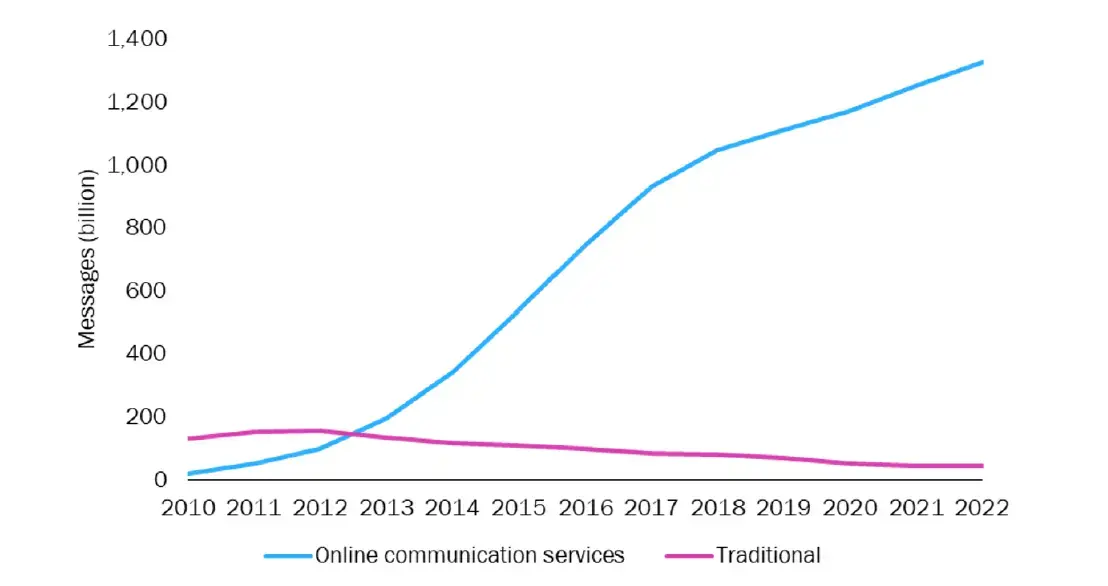
At the time of Facebook’s (now Meta) purchase of WhatsApp in 2014, the mobile app already had nearly half a billion users and added photo and video sharing and group chats, among other features. Even when WhatsApp added voice calls and video calling to its tooling shortly after the acquisition, its usage continued to grow exponentially. Today, more than 2.7 billion people use WhatsApp at least monthly and more than 1 billion messages are exchanged between users daily. Digital messaging apps overtook SMS and MMS messages in 2012 and have never looked back.
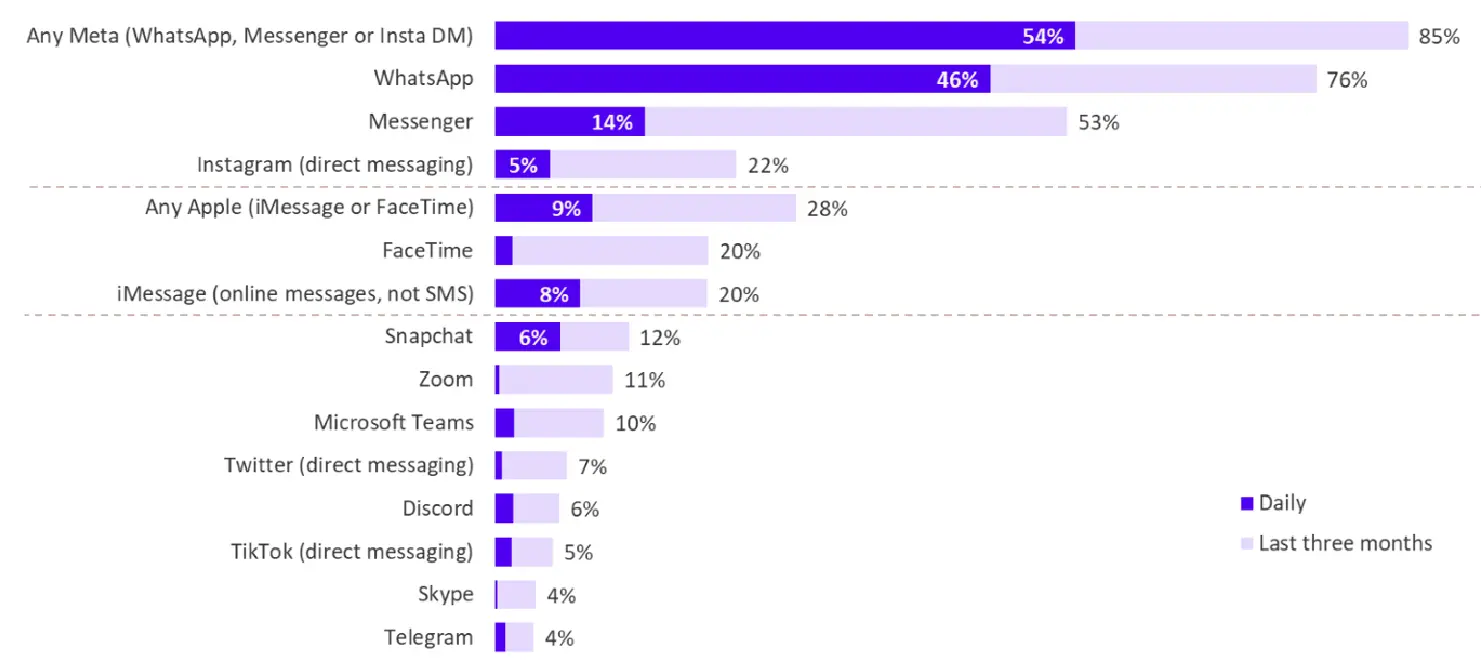
The most used messaging tools by UK adults, Q1 & Q2 2023
Messages sent via digital channels vs traditional (SMS & MMS), 2010-2022
This unprecedentedly rapid rise of a new medium also left its mark on the use of language: you’ll often hear “WhatsApp” used as a verb, in much the same way that we use “text” to mean “send an SMS”; “Will you WhatsApp me when your f light lands?” You can use WhatsApp on almost any device imaginable, whether it is a smartphone, tablet, laptop or fixed computer. With that, it is impossible to imagine the modern communication landscape without WhatsApp.
Why are CRM teams still stuck in a two-channel world (email and ads) while everyday brands, even in the African wilderness, are using WhatsApp to deliver smarter, faster, and more human customer experiences?
Read Andy’s blogBusinesses, agencies and governments have also discovered WhatsApp as an essential part of their communication mix, figures show. Since WhatsApp opened up its platform in 2018 to accommodate commercial needs, you can access more than 2 billion people via the business interface (API), expanding capabilities such as customer service, marketing and e-commerce.
One of the advantages of the WhatsApp API is the ability to reply to WhatsApp messages with multiple users. This not only allows your organisation to handle high volumes of messages, but also ensures a smooth transfer between colleagues. Very convenient for the customer!
A very interesting development in the (business) use of WhatsApp is its proactive use by organisations. Besides using WhatsApp reactively for support and assistance, you can also use the channel to take the initiative in customer communications.
For example, did you know that you can run campaigns with WhatsApp the same way you run campaigns for email and other social media? And that WhatsApp has an open rate of at least 98%, making it by far the most attractive marketing channel? The click rate is also significantly higher, at 45% to 60%.
By comparison, email has an average open rate of about 22%, while the click rate for most organisations hovers between 2% and 5%.
WhatsApp Business’s capabilities can be used in several ways. First, there is the WhatsApp Business App. This mobile app is available from the mobile app stores for all smartphone platforms and lets you communicate with your customers from a single device. You can set up automated replies in the app, label contacts and chats, and showcase your products from a product catalogue.
Applications that use the WhatsApp Business API go a step further. This software hooks into WhatsApp’s underlying technology and enables applications to communicate with your service software. A key benefit of this is that you can use WhatsApp Business not just individually but also as a team.
In short, where the WhatsApp Business App might be enough for sole traders and small businesses, for medium to large organisations, it often falls short and you will have to look for a higher-end solution. For example, the WhatsApp Business App also lacks chatbots, you cannot communicate with more than 256 people at the same time, and you cannot be logged in on more than 2 devices at the same time.
So while the WhatsApp Business API allows organisations to turn off messages, it is a waste to only send out boring, generic or commercial sales messages that are perceived as distracting. In this paper, we provide five inspiring examples of ways you can run more interactive campaigns with WhatsApp.
You can obtain leads through WhatsApp by encouraging potential customers to sign up for an email newsletter or send a special promotion to the potential target audience.
If your WhatsApp Business API software supports integration with a CRM, synchronising your lead file with the WhatsApp Business software will allow you to create a list of potential customers. The only condition for this is that you have the mobile numbers of your potential customers and that they have been in contact with you before.
If you want to build a list of leads/contacts that you may approach with a newsletter or promotion, add a WhatsApp Business chat button to your website and social profiles on Facebook, Instagram and X, for example. Or add a QR code to your printed marketing materials. You can also have the CTA of a paid advertising campaign be a contact initiation via WhatsApp.
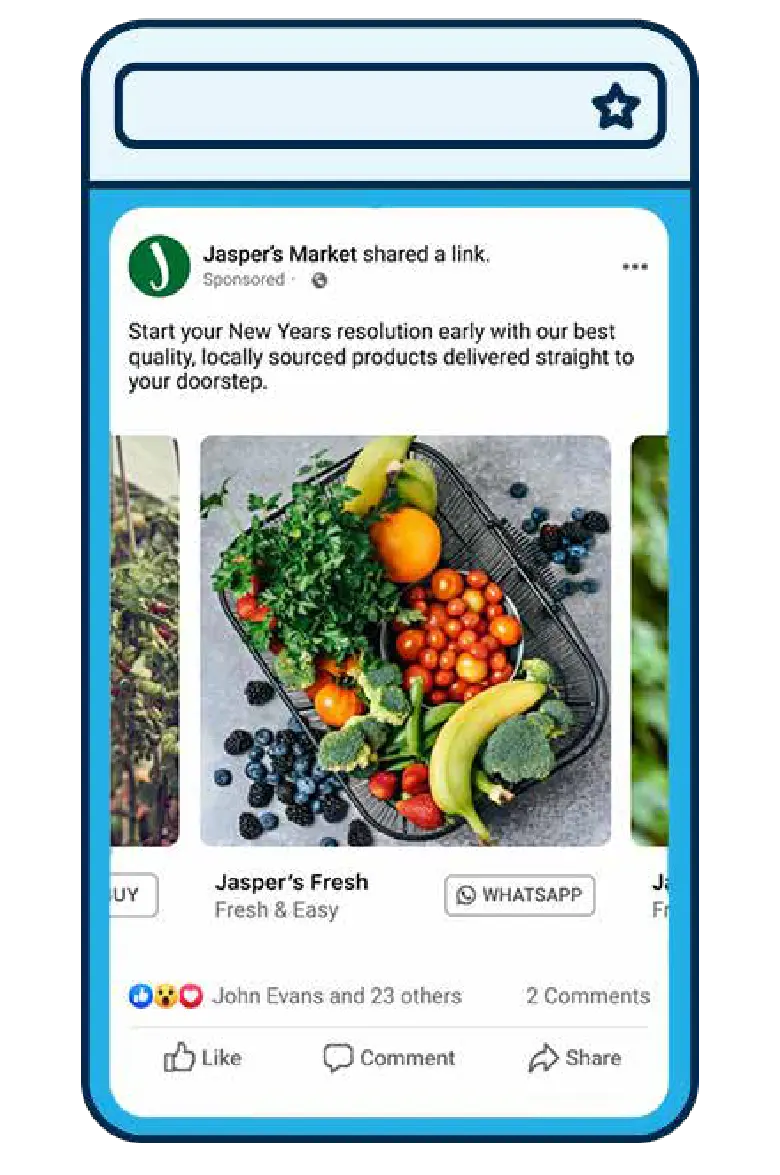
You can use WhatsApp to send channel-exclusive content to your customers that they won’t find anywhere else. Think discounts, trial periods on new services and exclusive subscriber content.
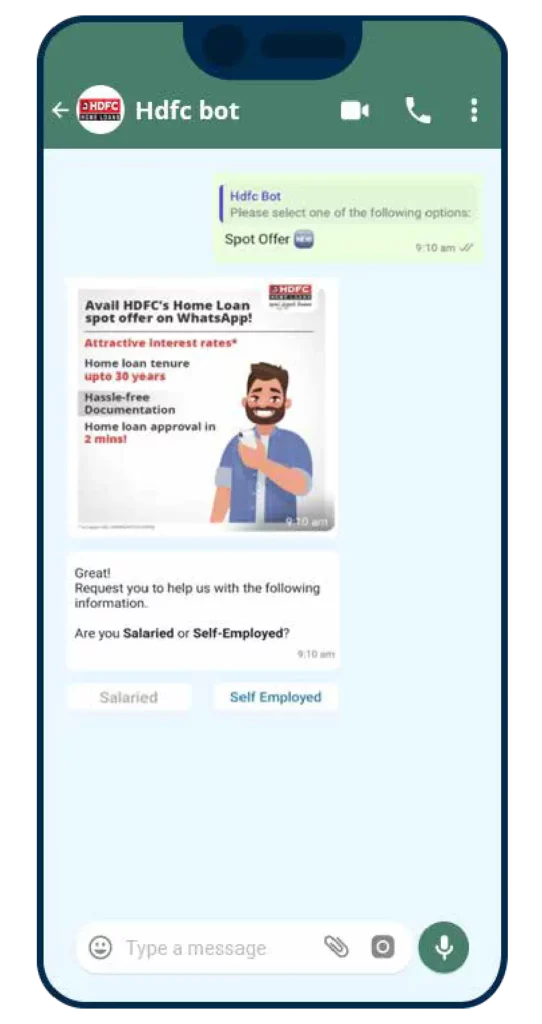
If you have contact information, then you can send out a newsletter via WhatsApp Business in the same way you would for email. However, it is recommended not to use the duplicate content 1:1 on WhatsApp; each social channel deserves its own approach and interpretation to be used effectively as a marketing channel. Divide your newsletter via WhatsApp into short messages with buttons, so that the subscriber gets a pleasant, interactive experience with your brand.
The real power of sending newsletters via WhatsApp lies in the fact that you have the opportunity to engage in 1-on-1 interactions with the target audience. The usual one-way traffic of email does not exist on WhatsApp.
Also, don’t forget that you can include a quiz or poll in such a newsletter. For example, a bank sending out a newsletter about a new type of savings account might add an interactive quiz in which the customer takes a test in which he or she is questioned about the level of savings rates and handling personal finances.
WhatsApp Business can boost sales by alerting customers to commercial opportunities for you via WhatsApp. Think of a reminder of an uncompleted digital shopping cart if you have a webshop. You can also send an order confirmation via WhatsApp after a purchase, or a button for adding a back order.
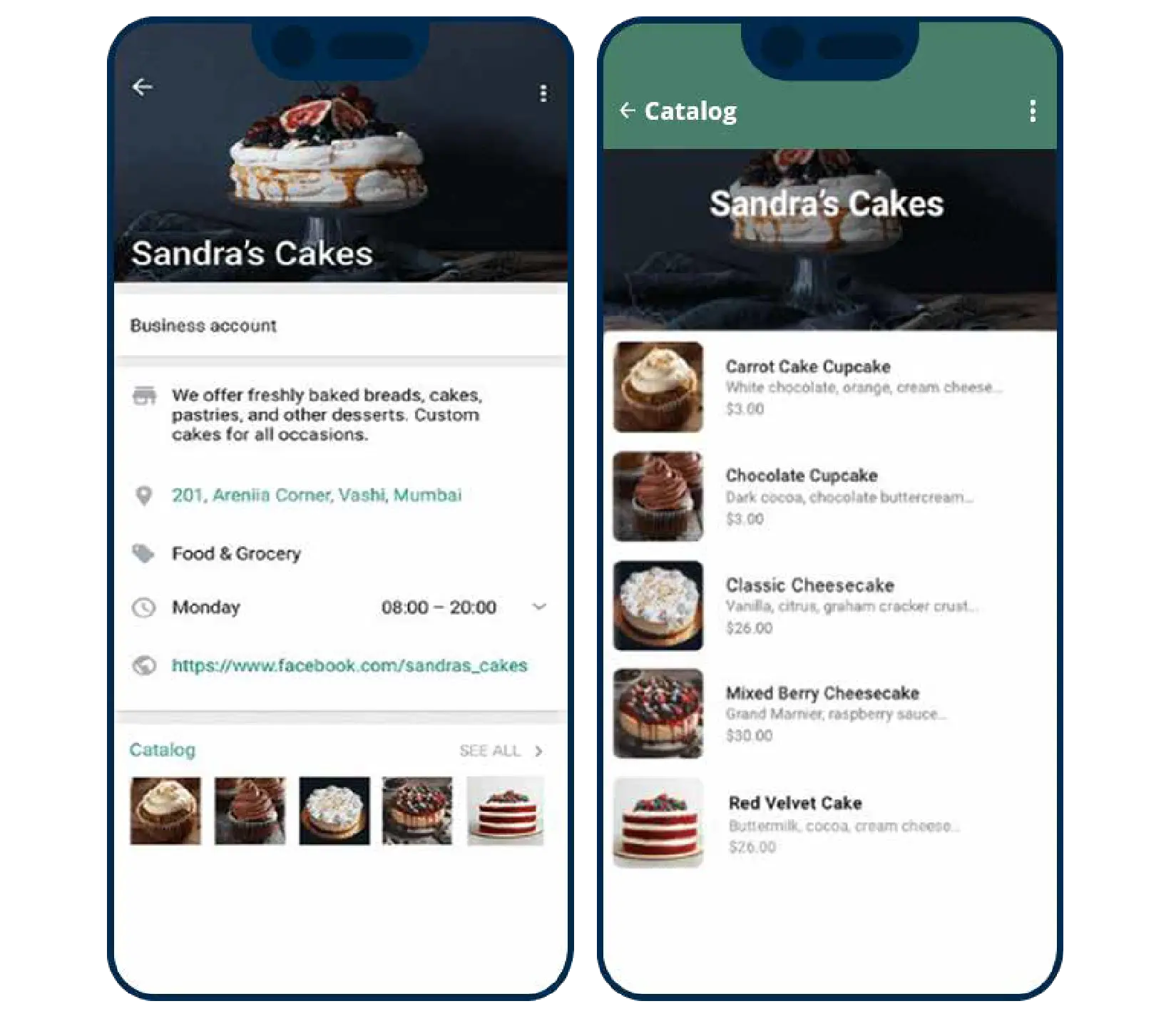
But you can also take the sales experience a lot further toward the social medium. Add your product catalogue to WhatsApp Business and let your customers browse through your offerings on WhatsApp and order directly from the medium.
For customers who want to offer users 24/7 service, WhatsApp is a godsend. WhatsApp Business offers support for real-time conversations, so customers can get answers to questions within seconds. In addition to customer support through a chat feature on your website or through a social medium like Facebook, Instagram or X, by using the WhatsApp Business API, you can also route support questions through the green channel.
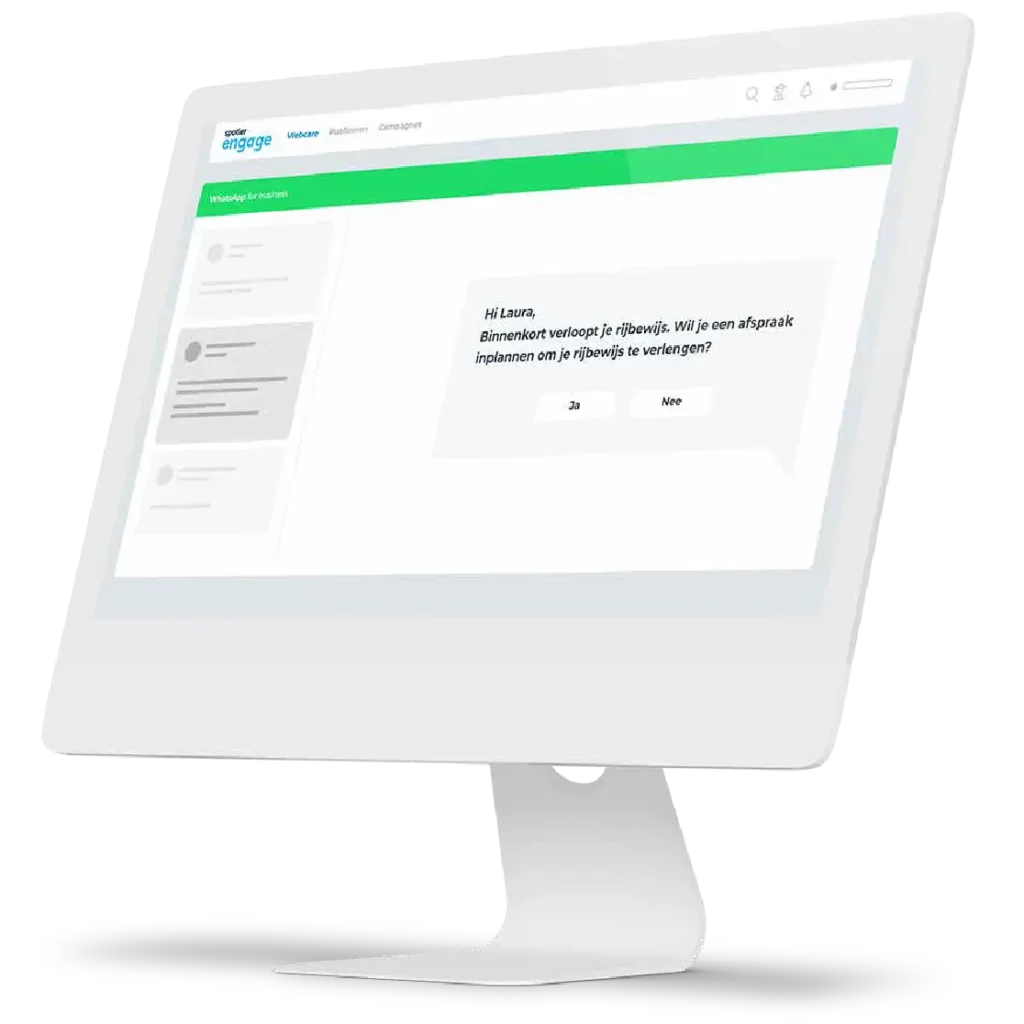
If you use the right tooling, you can add multiple agents and teams to your support channel to always have someone available to answer questions. Want to make sure messages are always answered in a very short time? Then set up an automated chatbot that assures your customer that the message was received correctly and that a quick response to the question will follow.
But there are more ways to offer service via WhatsApp, taking advantage of the channel’s exclusivity. Consider behind-the-scenes content that offers a glimpse into the ins and outs of your organisation or show sneak previews of upcoming products.
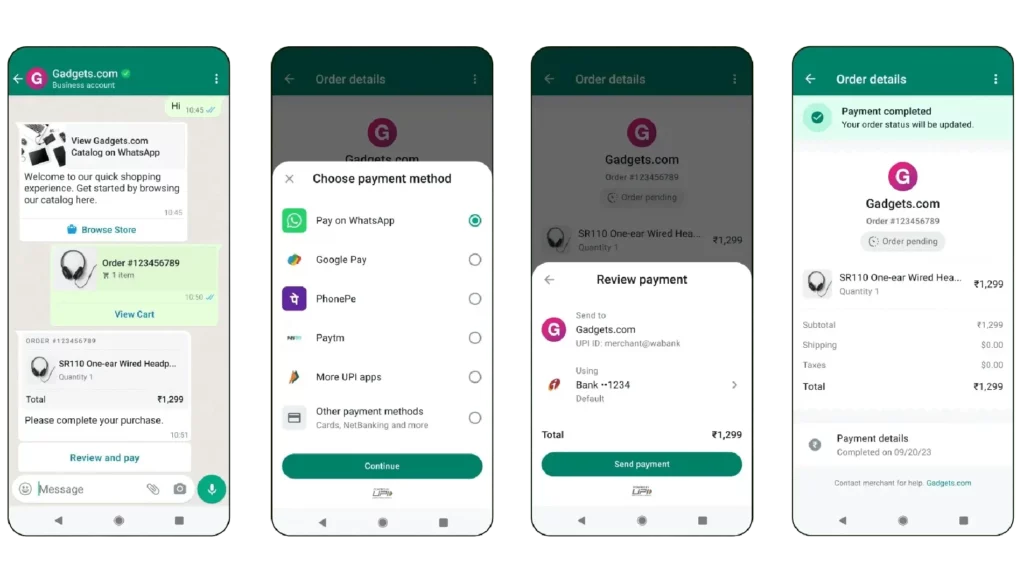
WhatsApp Business has built-in functionality to conduct transactions through the social platform. Through this feature, organisations can receive payments, sell products or services, as well as vouchers and offer promotions. In addition to your WhatsApp for Business API vendor needing to support optimized transactions, your organisation also needs to have a compatible payment provider.
What does this look like? Should a customer have made a payment, you can confirm it immediately via WhatsApp with a message like “Your payment has been received. Shipping is being prepared.” But even if a payment is still needs to be performed, you can make the process via WhatsApp: “Thank you for your order, click the button below to pay.”
In addition to being a popular platform for personal interactions, WhatsApp is a powerful platform for marketing. However, there are a few conditions attached to using WhatsApp as a business:
Get more from the fastest-growing messaging channel by adding it to your marketing mix. In an interactive demo, our WhatsApp specialists will guide you through the options.