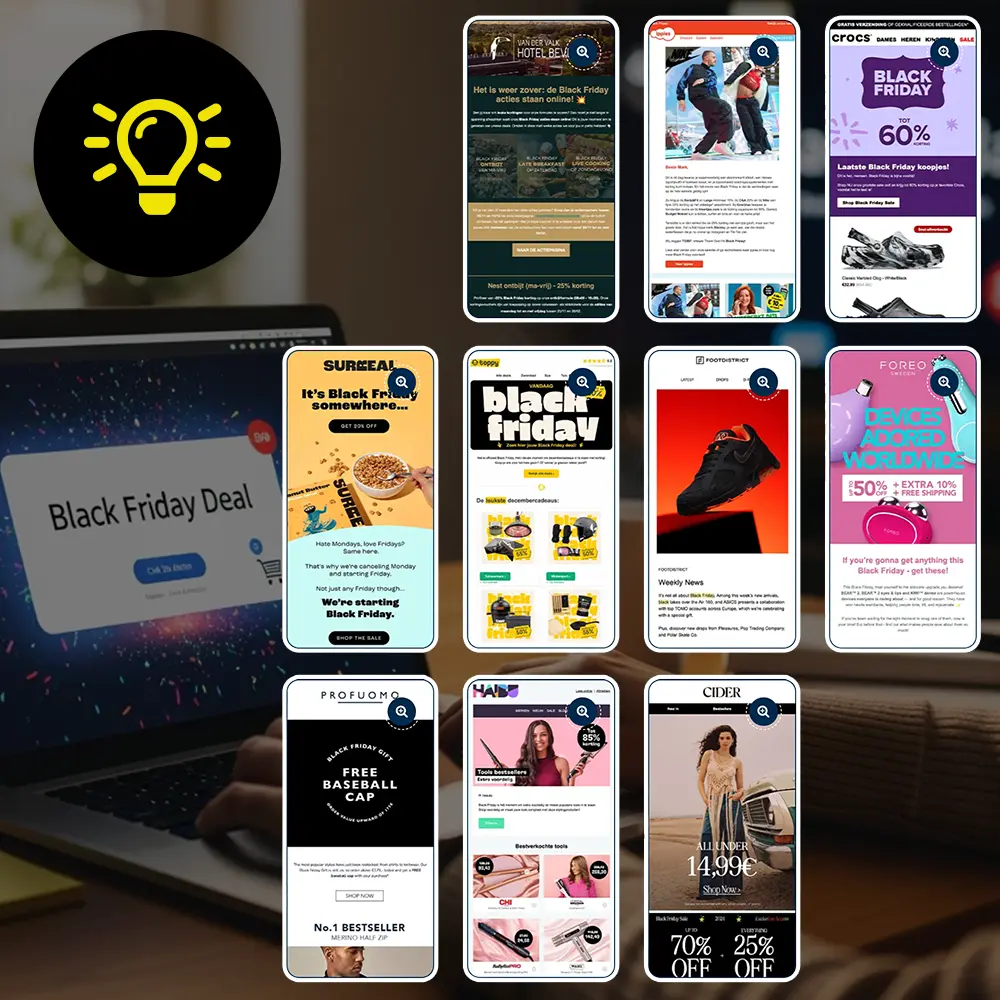
Black Friday is brilliant at bringing in new customers. The bigger opportunity is getting them to come back.
Reward’s analysis of peak-season shopping found that returning online customers spent 28% more than customers acquired during the Christmas period. The research also found weaker repeat behaviour online, with only 27% of online peak-season customers having shopped earlier in the year.
That makes the weeks after Black Friday particularly important. You’ve already done the hard work of winning the first purchase. Now you need to give those customers a relevant reason to make a second one.
Here’s how to use the period between Black Friday and Christmas to start building that relationship.
Bridging Black Friday & Christmas
These shoppers are already in a festive mindset, making Christmas campaigns the perfect follow-up.
Creating a targeted sequence that runs separately from your usual communications helps you stay relevant to both seasonal and regular shoppers.

Step 1: Launch a dedicated christmas flow
Use automation tailored to new BFCM buyers to keep them engaged:
- Welcome to Christmas
Send a friendly post-Black Friday message like, “Thanks for shopping with us! Still searching for gifts? Here are top picks.” - Personalised Recommendations
Use purchase data to suggest relevant gifts – board game purchase might prompt more family-friendly ideas, while a children’s order could trigger relevant toy recommendations. - Gift Guides & Last-Minute Picks
Mid-December, offer curated content such as “Top Gifts for Everyone” or “Last-Minute Presents That Ship Fast”. - Delivery Deadlines
Remind customers of shipping cut-offs to create urgency and prompt action.
Step 2: Run this campaign separately from business as usual flows
To avoid overwhelming or sending irrelevant content to newly acquired BFCM shoppers, run this Christmas campaign on its own automation workflow.
Here’s how to make it distinct:
Unique segments
- BFCM customers only: Keep this group separate from your standard mailing list.
- Exclusion lists: Ensure regular customers aren’t accidentally added to this campaign if they’ve already received similar Christmas content.
Adjust email frequency
While your regular audience might receive BAU campaign emails, keep the frequency lower for BFCM customers to prevent fatigue.
You need time to learn their behaviour. Start with a lower frequency than you use for established customers, then use their engagement and purchase behaviour to decide whether to increase it.

Step 3: Use seasonal momentum to fuel engagement
These customers have recently chosen to buy from you, giving you a short window to build on that engagement. Use their post-BFCM mindset to continue engaging them through festive content, special promotions, or loyalty incentives.
Exclusive BFCM perks
Reward these customers with access to extended discounts or limited-edition items. Position it as a thank-you for choosing your brand during BFCM.
Some of these customers will have been motivated primarily by the Black Friday offer, so an additional incentive may help encourage that important second purchase. This will help you convert that second purchase.
Gift wrapping and personalisation
Promote any extras like gift-wrapping services or personalisation options for items bought as gifts. For example: “Make it special with our free gift-wrapping service”.
Festive content
If you run a more lifestyle/content based brand then share engaging content like recipes, decorating tips, or holiday playlists to keep your emails relevant and enjoyable.
Step 4: Retention programmes – your next play
Holiday buys are often one-offs. Turn them into loyal customers with:
Thank you email
Send a genuine post-purchase thank you once the order has arrived, or after Christmas if the purchase was likely to be a gift. It gives you another useful touchpoint without immediately asking for another sale.
New Year offers
Roll into January with exclusive offers or promotions to generate that second or third purchase from your new BFCM customers.
Step 5: Enhance post-purchase communication
Use the post-purchase window to leave a great impression:
- Send order updates, delivery tracking, or quick wins via email or SMS.
- Add value with small surprises such as samples, or handwritten notes to build emotional bonds.
Step 6: Build trust with customer service & clear policies
Communicate proactively about returns, delivery issues and delays. Peak-season customers may be buying from you for the first time, so how you handle a problem can have just as much impact on retention as the original purchase.

Step 7: Keep shoppers engaged via social channels
Invite shoppers to join your social media communities:
- Encourage following your brand on social platforms through post-purchase emails.
- Highlight user-generated content or festive stories to keep your brand top-of-mind.
Step 8: Learn for the future
As with BFCM, track your Christmas campaign’s performance to refine next year’s strategy.
Key metrics to monitor include:
- Click and conversion rates: Are customers engaging and taking action?
- Repeat purchase rate: How many Black Friday customers buy again?
- Time to second purchase: How quickly are you converting first-time buyers into repeat customers?
- Revenue per customer: Are these customers becoming more valuable over time?
- Segment performance: Do gift buyers, deal seekers and self-shoppers behave differently?
These insights will help you fine-tune not only your Christmas campaign but also the bridge between BFCM and future seasonal strategies.
Why it works
By treating BFCM buyers as a distinct segment and guiding them with festive, purposeful content, you build a bridge from peak shopping to customer retention.
Not every Black Friday customer will become a loyal customer. And that’s fine.
Some came for the discount. Some were buying a present. Some might not need what you sell again for another year.
The job isn’t to force every Black Friday buyer into your normal customer journey. It’s to learn enough about them to give the right people a relevant reason to come back.
That second purchase is where Black Friday acquisition starts becoming customer retention.
Black Friday Marketing Hub
No need to stress about your Black Friday campaign. We have a complete toolkit ready for you with all the help you will need. Stress less. Sell more. Start with your Black Friday campaign now!