Most discussions about AI and e-commerce focus on discovery: how do customers find your products through ChatGPT or Google Gemini? But something else is happening. AI isn’t just going to make recommendations – it’s going to buy. On behalf of your customer, without them ever visiting your online shop.
That doesn’t just change how customers reach you. It changes what a “new customer” actually means. Because someone who buys through AI doesn’t know your brand, has never seen your website, and barely knows who they’ve ordered from.
The question, then, isn’t whether you’re discoverable by AI. The question is what you do when AI delivers that customer to you.
What is agentic commerce?
The term “agentic commerce” sounds complicated, but the idea is simple: AI doesn’t just make recommendations – it also handles the purchase.
This is now possible thanks to new technical standards: ACP (Agentic Commerce Protocol) and UCP (Universal Commerce Protocol). These are agreements between systems about how they communicate with each other – in this case, between AI platforms and online shops, so that an AI can place an order, request a price and complete a payment.
The result: a customer who buys through ChatGPT has never seen your product page, never looked at a basket, never gone through checkout. AI has done all of that for them.
Will my online shop disappear?
No, but its role will change. Customers who already know your brand will continue coming directly to you. For brand experience, customer service, repeat purchases – your website remains indispensable.
But a growing proportion of your new customers will soon arrive via a route where they’ve never seen your website. They’ve bought through an AI assistant. They barely know your name, let alone your story.
And that’s precisely the point. That first purchase through AI is not a customer relationship. It’s a transaction. Whether you make more of it depends entirely on what you do next.
Four things that are changing structurally
1. Invisible product data doesn’t exist for AI
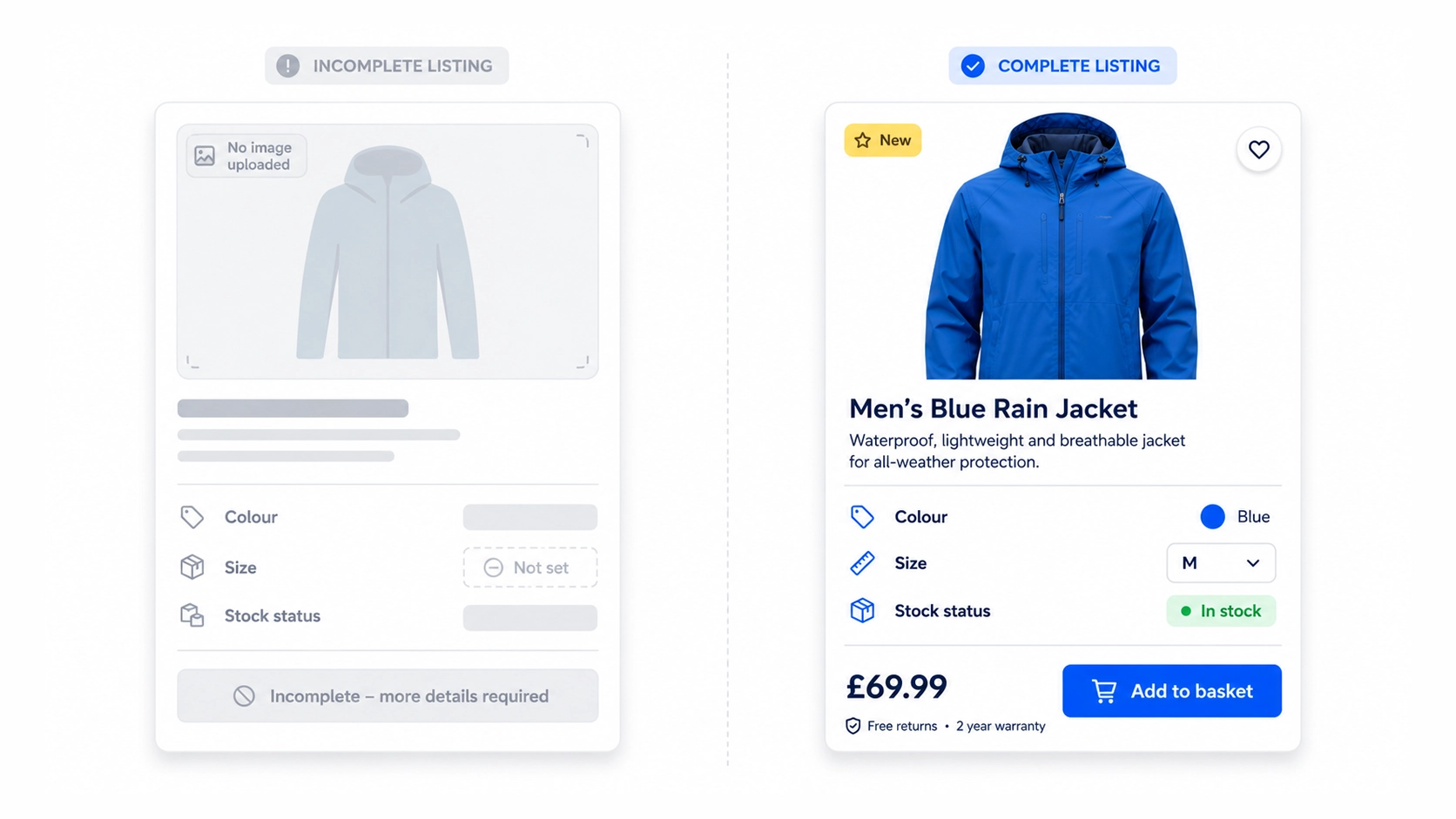
AI doesn’t look at how beautiful your website is. It reads data: product name, size, colour, price, stock, reviews. Nothing more. Incomplete product data, no size filter, unclear category, outdated stock – that means AI skips your product. Not because it’s poor, but because AI doesn’t understand it. You can have the perfect product and still be invisible.
Example: A customer is looking for a blue raincoat in size M for under £100. You have it. But your product feed only says “raincoat” with no size, specification or price. AI doesn’t show it. Your competitor with complete data wins the sale.
2. An AI customer doesn’t know your brand
With a normal purchase, a customer builds a connection with you along the way: they see your advert, read your reviews, browse your website. By the time they buy, they already know you a little.
With an AI purchase, all of that is skipped. You have an email address and an order. No connection, no recognition, no reason for them to choose you specifically next time.
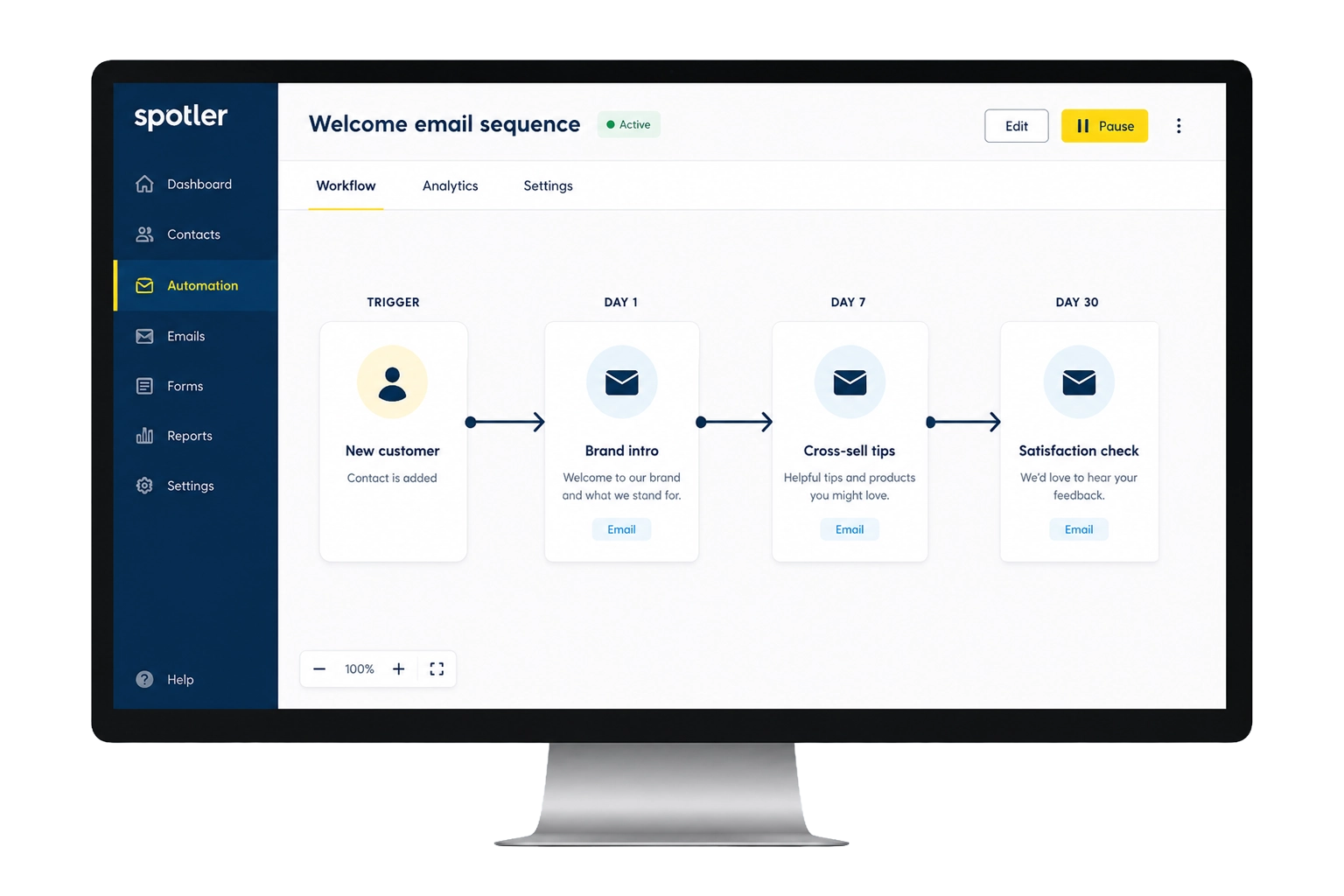
But this is also your opportunity. The order confirmation is the first real contact with that customer. If that email contains a trackable link, Activate can recognise the customer and enrich their profile, after which Mail+ can start a journey. From a cold transaction to a genuine customer relationship – with a single click.
Example: Customer buys running shoes through ChatGPT. Mail+ sends automatically:
- Day 1: Welcome email with your brand story
- Day 7: Tips for breaking them in + matching socks as a cross-sell
- Day 30: How are you getting on with the shoes?
- Day 90: Reminder that shoes need replacing after approximately 500 km
3. Last-click attribution no longer works
When a customer buys through ChatGPT, you can no longer look back at which advert or keyword made the difference.
What you can measure:
- How do these customers behave after the purchase?
- Do they come back?
- How quickly?
- How much are they worth over a year?
In Activate, you can see this per customer group, so you can compare AI customers with customers from other channels and adjust your approach.
4. Personalisation only begins after the purchase
On your own website, you can make recommendations during the visit. But when the purchase happens through AI, that opportunity isn’t there.
Your personalisation space lies in what comes afterwards: which product fits with the first purchase? When does something need replacing? You play that out through automated email journeys in Mail+. The cross-sell you used to do on the product page, you now do via email – at the right moment, based on what someone has bought.
Six things you can do right now
You don’t have to do everything at once. Start here:
- Get your product data in order. Complete titles, all attributes filled in (size, colour, material, intended use, etc.). AI can only recommend what it understands.
- Ensure your prices and stock are up-to-date. AI consults your data in real time. An outdated feed means missed recommendations, even if you have the best offer. Aim for direct synchronisation.
- Build a welcome journey for people who don’t know you. Set up an automated sequence in Mail+ that tells new customers who you are, what makes you different and what they can expect.
- Automate your follow-up communication based on the first purchase. Which product fits with it? When does something need replacing? In Mail+, you build this as an automated journey, so every customer receives the right message at the right moment – without manual work.
- Measure what customers do after the purchase. Not just ‘how many visitors’, but: does someone buy a second time? When? What are they worth over a year? These are the figures that will matter.
- Centralise your customer data. Purchases, email behaviour, website visits – in Activate, these come together in a single overview. That makes segmenting, comparing and targeted follow-up possible, including for customers who have come in through AI.
The real shift is not technical
Much has been written about the technology behind agentic commerce – the protocols, the integrations, which platform is already ready. That’s interesting, but it misses the point.
The real shift is human. A customer who buys through AI has a different relationship with your brand than a customer who has browsed your website themselves. That relationship simply doesn’t exist yet. You have to build it.
Companies that invest in good product data, smart lifecycle journeys and a central customer view turn every AI transaction into a starting point for a genuine customer relationship. Companies that don’t will remain dependent on the next purchase that AI arranges for them.
And the platform you do it on? That matters less than you think.
Shopify has an early connection to ChatGPT purchases, but the shift applies to everyone. With Magento, WooCommerce, Shopware or PrestaShop, you’ll get just as far – as long as your data and your communications are in order.
Want to know what specifically needs to change for you? We’d be happy to look at it with you.
Frequently asked questions
What is agentic commerce?
Agentic commerce means that an AI assistant (such as ChatGPT or Google Gemini) not only recommends a product, but also handles the purchase itself on behalf of the user. The customer doesn’t need to go to an online shop. AI compares products, chooses the best option and places the order – with the user’s permission.
Will my online shop disappear because of agentic commerce?
No. Existing customers and people who already know your brand will continue coming to your website. But some of your new customers will come in through AI without having visited your online shop. That changes how you need to build that relationship – not whether your website still exists.
What are ACP and UCP?
ACP (Agentic Commerce Protocol) and UCP (Universal Commerce Protocol) are technical standards that enable AI assistants to communicate securely with online shops to query prices and stock levels and complete payments.
Do I need to switch to Shopify?
No. Shopify was the first to have a direct connection to ChatGPT purchases, but the shift applies to all platforms. With Magento, WooCommerce, Shopware or PrestaShop, you can prepare just as well – by investing in product data, customer data and automated email communication.
How do I know if a customer has bought through AI?
It starts with labelling orders by source. Many AI platforms send a recognisable source with the order data. Through Spotler Connect you link your online shop platform to your customer data, so that information automatically ends up in the right place and you can compare AI customers with other customer groups.
What is the difference from ordinary product recommendations by AI?
With ordinary recommendations, AI gives advice, but the customer then goes to the online shop themselves to buy. With agentic commerce, AI also handles the transaction – the customer gives their permission, and AI takes care of payment and confirmation without the customer visiting the online shop.
How do I measure success when last-click attribution no longer works?
By looking at behaviour after the purchase. Do customers come back a second time? Within how long? What is their average value over a year? In Activate, you compare customer groups by behaviour, so you can see whether AI customers are worth more or less than customers from other channels.
What is a CDP, and why do I need it?
A CDP (Customer Data Platform) brings all customer information together in one place: purchases, website visits, and email behaviour. That enables targeted follow-up – including for customers who have come in through AI and have never visited your website.