If you’re a mum working in marketing, social media can sometimes feel like the one task that never really ends. There’s always another platform to think about, another trend to keep up with, another post that “should probably go out today”. And more often than not, it lands right in the middle of everything else, meetings, deadlines, school pick-ups, bedtime routines, and the general chaos of life.
It’s no surprise that social often becomes reactive. A quick post here, something thrown together there, just to stay visible. But in 2026, social media is too crowded, and our time is too valuable for random posting without direction. There are now 5.4 billion social media users worldwide, and the average person uses six to seven platforms every month. That means your audience is constantly scrolling, but so is everyone else’s. Posting more isn’t the solution. Posting with intention is.
What Mums in Marketing really need isn’t more content ideas, but a strategy that fits into real life.
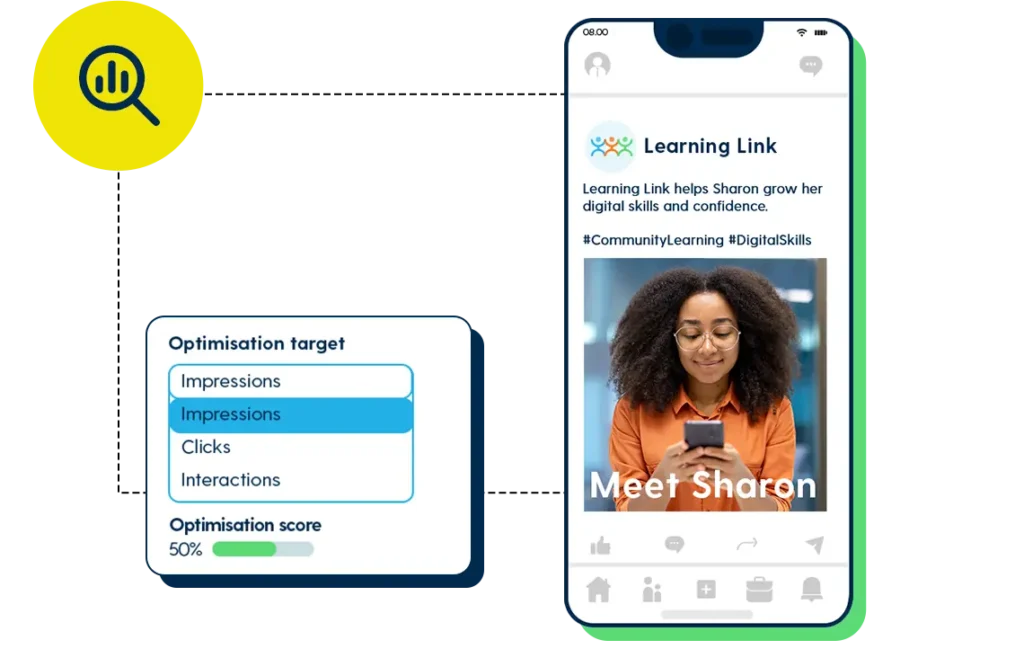
Turn assumptions into structured experiments
A proactive strategy doesn’t start with “Let’s post more.” It starts with “Let’s test smarter.” Instead of guessing what works, build small experiments into your content plan. For example, you might test:
- Two or three different posting time windows per platform
- Two or three formats (carousel, static image, short-form video)
- One consistent content pillar, so results are comparable
Run that consistently for four to six weeks, then review performance against your actual objective, not just likes.
This approach does two things. First consistency helps you understand what works much faster. Second, it removes emotion from performance. You’re not reacting to one “bad post”; you’re analysing patterns over time. That’s how social becomes strategic.
Decide what success actually means
One of the biggest traps in social media is measuring everything and understanding nothing. Before you create a single post, define what you’re trying to achieve. Most social strategies fall into five core objectives:
- Awareness
- Engagement
- Traffic
- Conversion
- Retention and community
Each one changes what good performance looks like.
- If your focus is awareness, reach and impressions matter.
- If you’re driving traffic, click-through rate is critical.
- If conversion is the goal, you care about intent and actions taken.
- If you’re building community, saves, comments and return engagement matter more than surface-level likes.
Without that clarity, social turns into another task on your never-ending to-do list. When you know what you’re aiming for, you can say no and spend your time on content that genuinely supports your goals.
What realistic consistency looks like in 2026
There’s a lot of noise about “posting daily”, but sustainable consistency is far more powerful than volume. For example, a strong Instagram rhythm for many brands looks like:
- 3–5 feed posts per week, mixing carousel, short video and static content
- Stories on most posting days
- 1–2 larger pieces (such as a Reel or mini-series episode)
On LinkedIn, many professionals see traction with:
- 2–4 posts per week
- One thought-leadership piece
- One proof-driven post (case study, stat, testimonial)
On faster-moving platforms like X, brands may post 3–7 shorter updates per week, particularly when customer care or commentary is involved.
But here’s the key: if that pace isn’t sustainable, scale it down, not up. It’s better to commit to one strong, repeatable format than to burn out chasing frequency. Consistency isn’t about volume. It’s about rhythm.
Social works best when supported by systems
Most Mums in Marketing aren’t just creators. We’re planners, approvers, responders and analysts, often all in one role. That’s why structure matters just as much as creativity.
A mature social setup usually covers four areas:
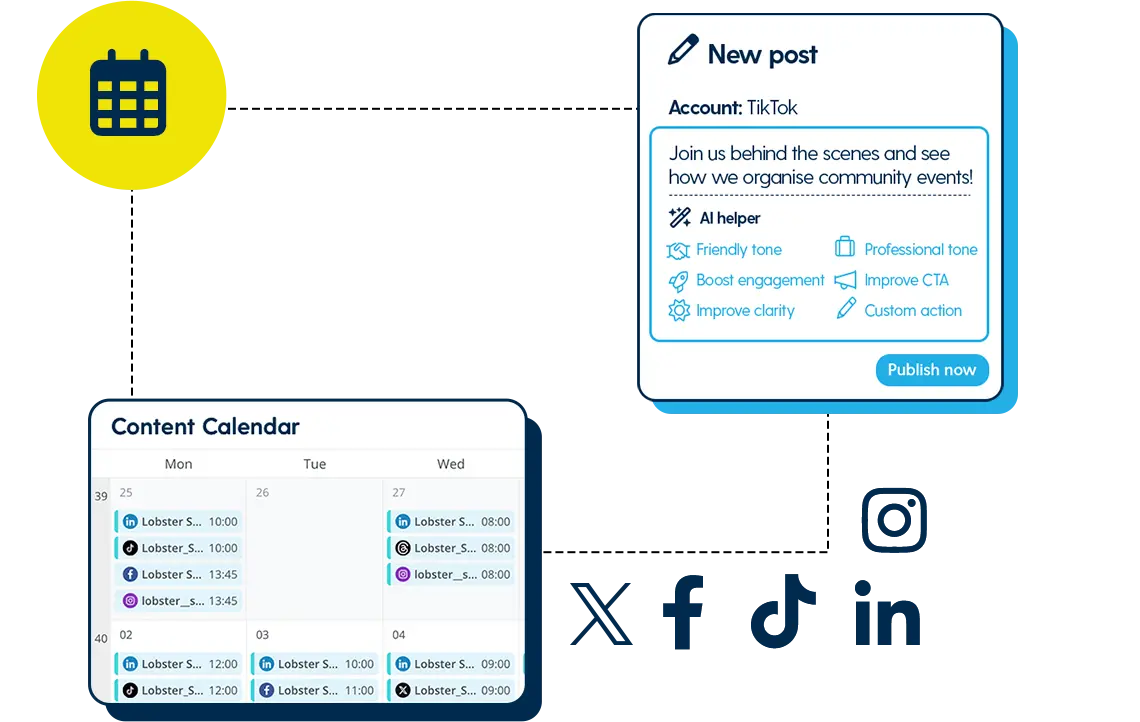
- Planning – A visual content calendar, cross-platform scheduling, approval workflows, and organised asset libraries.
- Engagement – A unified inbox for comments and DMs, clear ownership of responses, and response-time tracking.
- Listening and safety – Monitoring brand mentions, alerts for spikes in sentiment, and the ability to pause scheduled content if needed.
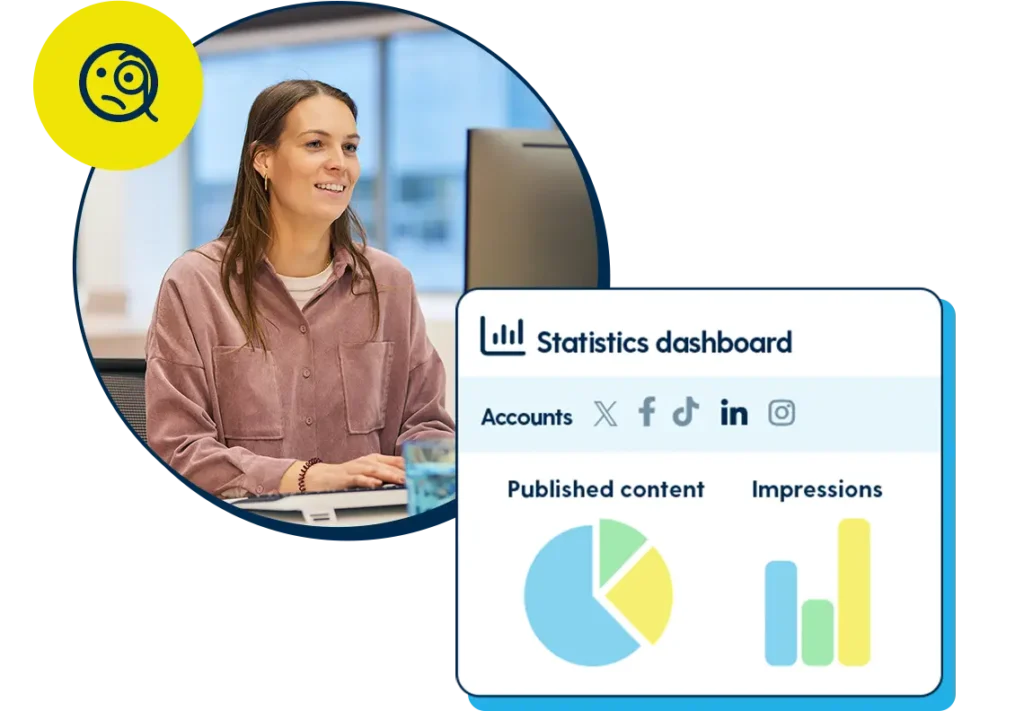
- Measurement – Cross-channel reporting, tagging by campaign or content pillar, and benchmarking against your own past performance.
Without systems, social feels chaotic. With systems, it becomes manageable even alongside everything else you’re juggling.
Many teams solve this with integrated social management tools that combine planning, engagement and reporting in one place, so you’re not switching between five different platforms every day. Tools like Spotler’s can help bring planning, engagement and reporting together in one streamlined workflow.
Build in iteration from the start
The most effective social strategies follow a simple loop:
- Plan
- Create
- Publish
- Monitor (especially the first hour)
- Review performance
- Refine and repeat
The goal isn’t constant reinvention. It’s a structured improvement. Over time, small optimisations compound better timing, sharper messaging, clearer calls to action. That’s where momentum builds.
The real advantage Mums in Marketing already have
Tools, automation and dashboards make social more efficient. But they’re not the only thing that makes it effective. Empathy is.
Understanding audience behaviour. Recognising emotional triggers. Knowing when to pause instead of post. Balancing visibility with authenticity. In a world of 5.4 billion users and endless noise, human judgement is the differentiator.
And that’s something Mums in Marketing bring naturally.