





AI marketing means using artificial intelligence to automate, optimise and personalise marketing: predicting what customers will do, generating content, holding conversations and finding patterns in data that people would miss. At Spotler, we define it as employing AI technologies in your marketing strategy, or within marketing technology itself, so that organisations communicate more efficiently and effectively with their audiences.
AI is not new, but the pace at which it has spread through marketing in the past few years is. This article explains what AI marketing covers, how teams use it today, where it works and where it falls short, and what it will and will not replace.
What does AI marketing cover?
Four families of AI do most of the work in marketing. Each deserves its own explanation, so here is the short version with a pointer to the detail:
- Predictive AI learns from historical data to forecast what is likely to happen next, such as which customers will buy again or which leads will convert. Our guide explains how predictive AI works.
- Generative AI creates new text, images and video from a prompt, from subject lines to product descriptions. Read our guide to what generative AI is.
- Conversational AI powers chatbots and assistants that answer questions in natural language, on your website or in messaging apps.
- AI analytics lets you ask questions of your data in plain language and surface trends you didn’t think to look for. Our guide covers nine ways AI analytics improves marketing.
How is AI used in marketing today?
Mostly in ordinary, practical ways. The table shows the most common uses and where to read more.
What are good examples of AI marketing?
The best examples use AI to improve the customer experience, not just make the marketer’s job easier.
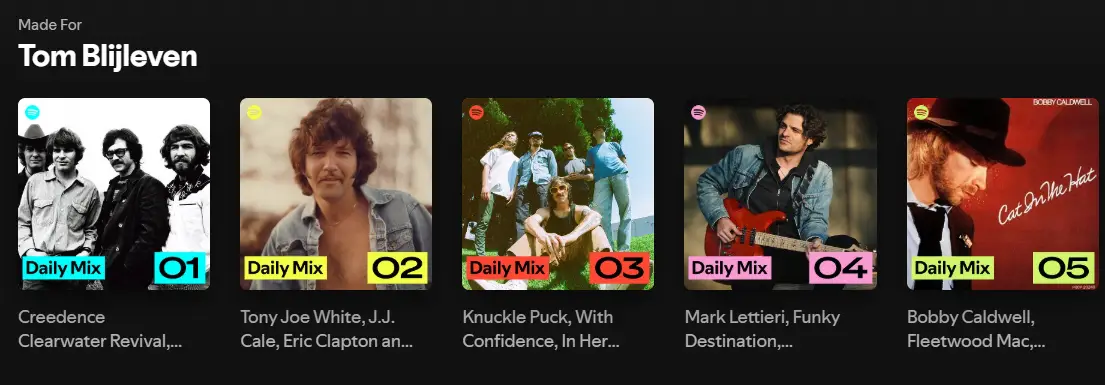
Spotify’s Discover Weekly
Spotify analyses each listener’s preferences and listening behaviour to build a personal playlist every week. It is personalisation at a scale no team of editors could manage, and it gives people a reason to come back.
The Starbucks app
Starbucks uses predictive analytics in its mobile app to offer personalised recommendations, and applies the same insight to inventory management. Customers get more relevant suggestions, and stores waste less.
Closer to home: B2B and ecommerce
Most AI marketing is less visible. A B2B marketer uses predicted conversion likelihood to decide which leads go to sales this week. An online retailer groups customers by predicted lifetime value and gives the most valuable ones early access to a sale. An email marketer asks for five subject line options, picks one, rewrites it and tests it against her own. None of these replaces judgement; each saves time or sharpens a decision.
How is AI marketing different from traditional marketing automation?
Traditional marketing automation follows rules you write: if someone downloads a guide, send an email two days after three days. AI learns patterns from data and adapts: it estimates who is likely to convert, when someone tends to open, or which product they are most likely to want next.
The two work best together. Rules give you control and predictability, which matters for consent, compliance and brand. AI adds judgement at scale, deciding within those rules which message, product or moment fits each person best.
Does AI marketing actually work?
It works when the basics are in place, and disappoints when they are not. In our experience, the difference usually comes down to four things:
- Clean, connected data. AI learns from what you give it. Duplicates, gaps and disconnected systems produce confident but wrong answers.
- A specific goal. “Use AI” is not a goal. “Increase repeat purchases from first-time buyers” is.
- A baseline. Measure results before you start, and compare against a group that does not get the AI-driven treatment.
- Human review. Someone checks what AI produces before it reaches customers, especially generated content.
Time to results depends on the use case. Content assistance saves time from day one. Predictive models need enough history to learn from, and their value shows over several campaigns rather than one.
Which AI is best for marketing?
There is no single best tool. The useful distinction is between general-purpose AI assistants and AI built into your marketing platform.
General assistants are flexible and good for brainstorming, drafting and research. AI inside your marketing platform knows your contacts, campaigns and results, so it can predict, segment and personalise with your data, under the data processing agreement you already have.
Whichever you use, ask the same questions: what data does it see, where is that data processed, can you review output before it goes live, and does it connect to the systems where the work happens?
Will AI replace marketers?
It will replace tasks, not the people who decide what is worth doing. AI already handles first drafts, variations for testing, routine reports, and segment suggestions well. Strategy, positioning, customer understanding, brand judgement, and the decision about what not to send are not.
The skills that grow in value are the ones that direct AI well: clear briefs, critical review, data literacy and knowing your customer. Writing a good prompt is part of that, as our article on the importance of a good AI prompt explains. Our colleagues also wrote about three things email marketers hand over to AI too quickly.
Will AI replace your CRM?
No. AI changes how you use a CRM, not whether you need one. AI needs a reliable record of who your customers are, what they bought and what was agreed, and that record is the CRM.
What changes is the work around it. AI already summarises contact histories, suggests next steps, scores leads and lets you query the CRM in plain language. The CRM becomes easier to use and more useful, but it remains the system of record. For the fundamentals, see our guide to what a CRM is.
What comes next for AI in marketing?
- AI in the inbox. Gmail and Outlook now use AI to filter, summarise and rank email. Read what the AI inbox and Gmail’s AI overviews mean for your campaigns.
- AI that shops for your customers. Assistants are starting to research and buy on people’s behalf. Our article on agentic commerce explains what that means for online shops.
- New routes to discovery. Shoppers increasingly start with AI rather than a search box, as we describe in how AI is changing webshop discovery.
- Regulation. The EU AI Act is phasing in obligations, including transparency rules for chatbots and AI-generated content. Plan for disclosure and human oversight now.
Frequently asked questions
Is AI marketing GDPR-compliant?
It can be. The questions are the usual ones: is there a lawful basis for the data you use, is the processing transparent, and where is the data processed? Be careful with personal data in prompts to general-purpose tools. Our article on the US CLOUD Act explains why data location matters.
How should you get started with AI marketing?
Pick one use case with a clear goal and data you trust, such as subject line testing or predicting repeat buyers. Set a baseline, run it for long enough to judge, then decide whether to expand.
Spotler and AI marketing
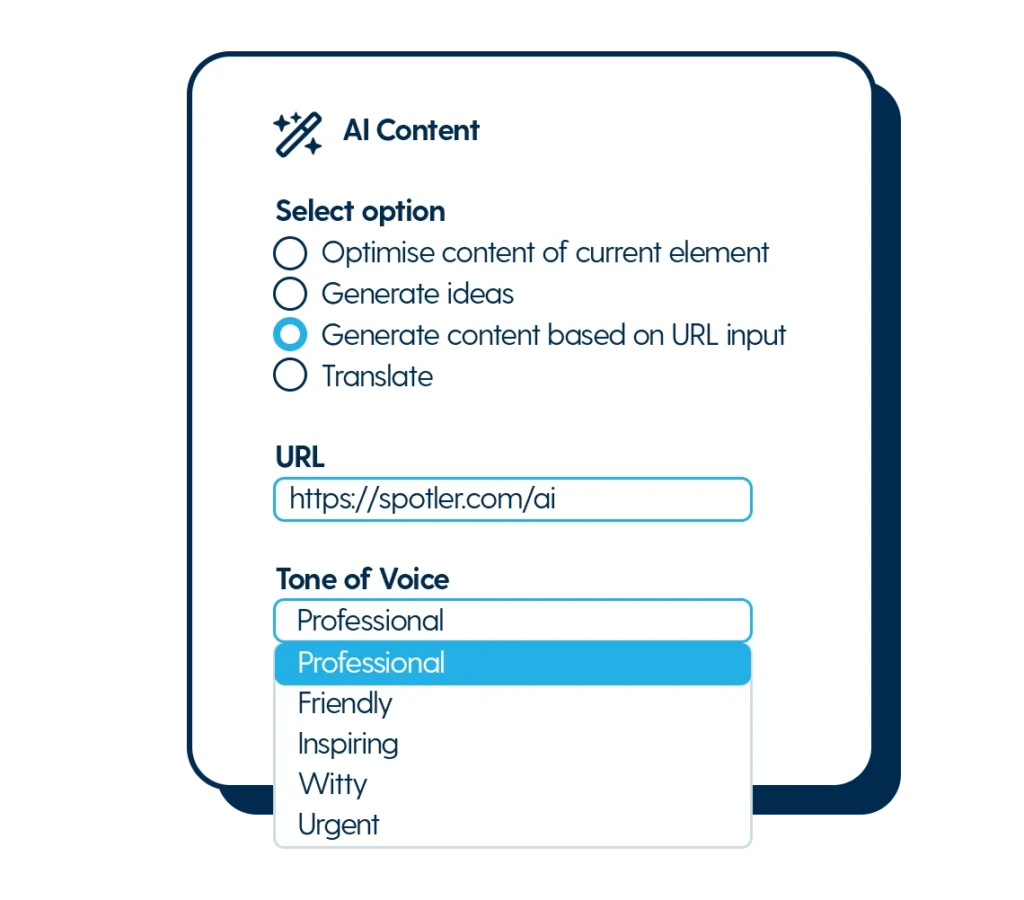
We have built AI into our products to make them smarter and easier to use. In Spotler Mail+ and Spotler Social, generative AI suggests email text and subject lines from a link to your website or blog, and writes social posts from a topic you define. Our chatbots use conversational AI with custom dialogues, answers within the domains you set and tone-of-voice management. Spotler Activate includes a predictive AI add-on that groups customers by predicted lifetime value in dynamic segments. And AI Analytics lets you talk to your data across channels.
Read more about our vision on AI, or book a demo to see it with your own data.
