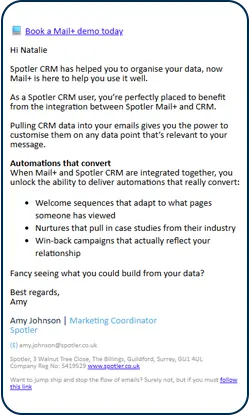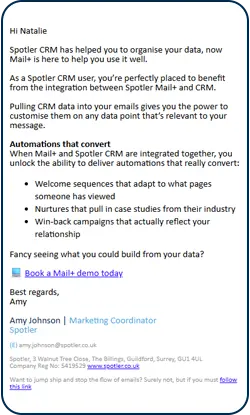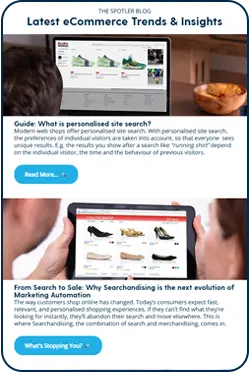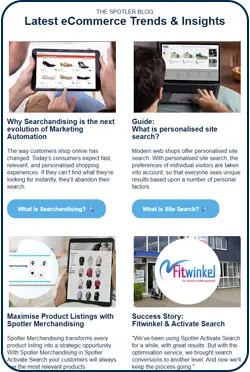
Welcome to the Great British Split Test 2025. Using our own Mail+ platform, we’ve spent 9 months investigating ways to make our marketing emails more effective than ever.
The Great British Split Test is our research exercise where we choose several elements of an email and see whether we can improve the Click-Through Rate with small tweaks.
You can explore our previous results here:
It’s fashionable to say that split testing is dead, that “big data” means that you should now be delivering 1-on-1 emails to every single member of your email list.
Well, we disagree.
Simply put, improving the Click-Through Rate of these emails by 0.1% is worth roughly £1000 of revenue per campaign. Little tweaks can have a big impact!
If nothing else, we’re standing up for all the marketers out there who don’t have the time or tools to get that fine-grained with their data, but are still under pressure to deliver better results faster than ever before.
| Test Type | Test |
| Subject line | Single Word vs standard subject line |
| Subject line | Teaser vs. Direct subject line |
| Snippet | Emoji only vs. Generic snippet |
| Snippet | AI written vs. Human written snippet |
| Snippet | All Caps vs normal snippet |
| Layout | Link Colour – Google Blue vs. red |
| Layout | Left aligned vs. right aligned |
| Layout | CTA above Salutation vs Below |
| Layout | Standard Copy vs Minimalist |
| Layout | Prod Image vs People Image |
| Layout | Text vs HTML |
| Layout | Single column design vs Two column design |
| Time and Date | AM vs PM |
| Time and Date | 9-5 vs Outside 9-5 |
| Time and Date | Monday/Wednesday/Friday vs. Tuesday/Thursday |
Our “lab” was our regular calendar of email campaigns, including monthly newsletters, direct new business sales messages and cross-sells to our existing customers.
In total this covered 200 campaigns, with an average audience of around 11,000 people.
It’s important to remember that a Split test does not ask people which of 2 versions they prefer. Half of the audience receive each version, and whichever version earns more clicks is declared the winner. As the split is random, we consider the results to accurately represent the audience as a whole.
| Test Type | Test | Winner |
| Subject line | Single Word vs standard subject line | Single Word |
| Subject line | Teaser vs. Direct subject line | Teaser |
| Snippet | Emoji only vs. Generic snippet | Emoji |
| Snippet | AI written vs. Human written snippet | Human |
| Snippet | All Caps vs normal snippet | Normal |
| Layout | Link Colour – Google Blue vs. red | Blue |
| Layout | Left aligned vs. right aligned | Left |
| Layout | CTA above Salutation vs Below | CTA Above |
| Layout | Standard Copy vs Minimalist | Minimalist |
| Layout | Prod Image vs People Image | People |
| Layout | Text vs HTML | HTML |
| Layout | Single column design vs Two column design | Two Column |
| Time and Date | Mon/Weds/Fri vs Tues/Thurs | Mon/Weds/Fri |
| Time and Date | AM vs PM | AM |
| Time and Date | 9-5 vs Outside 9-5 | 9-5 |
| Single Word subject line | Standard subject line |
| Connect | Don’t just automate. Connect. |
| ♻️ Sustainability | ♻️ Sustainable marketing is a hot topic for 2025 |
| Disconnect | Why your campaigns aren’t landing like they used to |
🏆 Winner: Single Word
⚖️ Average Difference: 0.39%
Most of the discussion around subject line length focuses on maximum, as mobile devices account for an ever-larger percentage of opens. So we went short instead!
| Direct subject line | Teaser subject line |
| 🛍️ Shopify store gearing up for Black Friday? | 🛍️ A quick edge before the chaos begins |
| Turn CRM clutter into campaign clarity | What your CRM isn’t telling you (yet) |
| Personalisation at scale | They opened it. Because it was meant for them. |
🏆 Winner: Teaser
⚖️ Average Difference: 0.04%
Do you like surprise presents for Christmas? My wife doesn’t. She asks for what she wants, and I buy it.
But I still wrap it up. The human brain is wired to appreciate a bit of a mystery or a puzzle. By making the reader pause for a second, you grab their attention. But you don’t want to be too clever; your audience will receive something like 147 emails a day, so they won’t devote many seconds to each one.
| Emoji-Only snippet | Generic snippet |
| 🛻 🚛 🚚 🔀 🙈 🔀 📧➕ | RHA made the switch from Mailchimp |
| 💻🤝📧➕ | The ESP trusted by NetSuite themselves |
| 📈 ❌ 💼 🤝 💰 | Fewer spreadsheets, more selling |
🏆 Winner: Emoji-Only
⚖️ Average Difference: 0.32%
When we’ve tried emoji-only subject lines, they’ve not done well. So then why do emoji-only snippets perform better than regular words?
We think it’s contextual. When the subject line is emoji-only, the reader’s brain has to work hard to figure out what we’re trying to say. In a busy inbox, that’s too much work and we lose them.
When it comes to the snippet, you still have the subject line providing a steer on what the message is. Emojis may add something, or they may simply break up the wall of text in way that’s eye catching. The next iteration of this will be testing emojis that form a ‘sentence’ against random emojis, to see how much meaning our readers are attaching to them.
| AI-Written snippet | Human-Written snippet |
| Discover Spotler Analytics in our live webinar on 16 July. | Join our 16 July webinar to watch Spotler Analytics rewrite reporting. |
| TikTok and Threads in Engage now. Work better, post everywhere. | New channels, smooth workflow. Try TikTok and Threads in Engage today. |
| powered by Spotler’s smarts | with a little help from Spotler |
🏆 Winner: Human
⚖️ Average Difference: 1.08%
In Walnut’s State of Generative AI in B2B Marketing Report, 75% of respondents were using AI for assistance with email campaigns. But is it making a positive impact?
Given how similar the AI outputs were to our human efforts, a 1% swing is surprisingly large. In many conversations about AI content , it comes up that people can tell when something is AI-written, but can’t always say how they know. All we can say for sure from this test is that when they spot it, the reaction isn’t positive.
| All Caps snippet | Normal snippet |
| SPOTLER MAKES THINGS SMOOTHER | Spotler makes things smoother |
| TIME TO IMPROVE YOUR EMAIL PERFORMANCE 📈 | Time to improve your email performance 📈 |
| WEBINAR | SUSTAINABLE MARKETING – THE CORE PRINCIPLES ♻️ | Webinar | Sustainable marketing – the core principles ♻️ |
🏆 Winner: Normal Case
⚖️ Average Difference: 0.83%
Don’t shout at me!
Using all caps to signify volume isn’t a Millennial phenomenon; New Republic traced its origin as far back as 1984 on early online bulletin boards.
That may be why this approach was rejected by our audience; if email is designed to start a conversation, yelling isn’t a great way to start.
| Google Blue – link colour | Spotler Red – link colour |
| I’d love to see you there! | I’d love to see you there! |
🏆 Winner: Google Blue
⚖️ Average Difference: 2.43%
Sometimes there’s nothing wrong with the default.
We’ve referred to the default link colour as “Google Blue”, but some digging by Mozilla’s Distilled blog suggests that the first appearance of blue hyperlinks came in April 1993 with Mosaic O.13!
With such a storied history, it’s no surprise that a blue hyperlink earns more clicks than a branded colour.
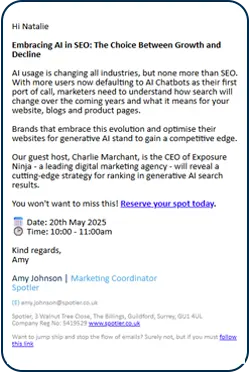
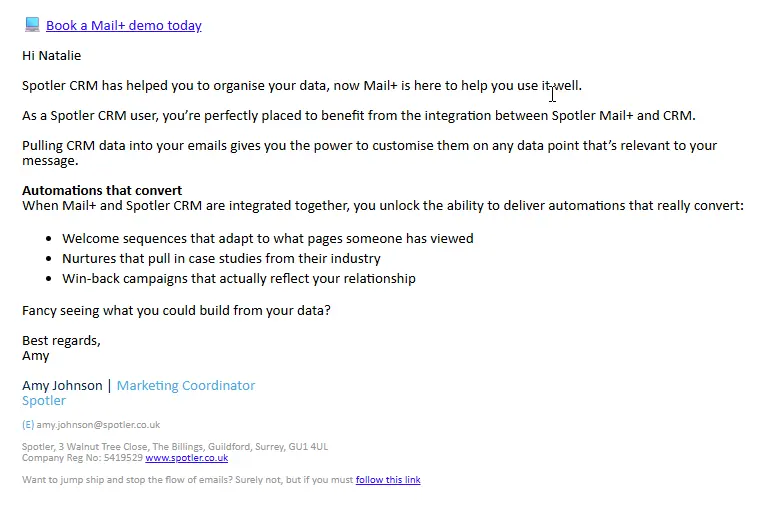
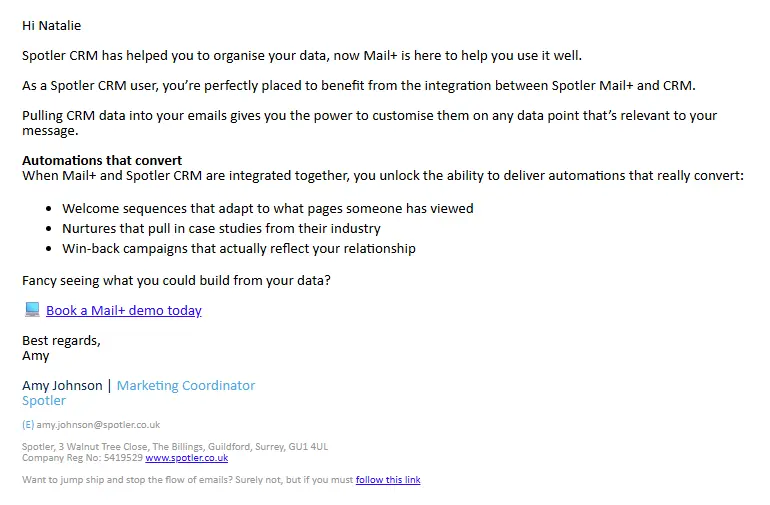
🏆 Winner: CTA Above
⚖️ Average Difference: 0.18%
We’ve all heard the stat that inboxes now receive 130 emails per day on average. So with this test we made it easier for a reader to see what we want from them. And the majority appreciated it!
We’ve also seen this approach in the wild; our customer Kempinski Hotels used this in the welcome series we helped them build.
🏆 Winner: Multi-column
⚖️ Average Difference: 1.18%
Make it easy for your readers to see what’s valuable to them in your email.
A 2-column layout lets the recipient of your email give it a quick scan and decide if there’s anything they want to click on. Particularly if they’re viewing your email in a Preview pane, they won’t spend a long time scrolling; they’ll shrug and move on.
🏆 Winner: Minimalist
⚖️ Average Difference: 0.06%
This seems like a continuation of the previous result; our audience appreciated email layouts that they could scan quickly for value.
🏆 Winner: People
⚖️ Average Difference: 0.3%
We’ve all heard “people by from people.” Well, it seems to hold true in the inbox as well! Especially in the world of software, where self-service help centres and automated chat support are becoming more and more common, a little human connection is still a very powerful thing.
This can be a surprisingly subtle difference; in testing we sometimes had to point out the split to whoever was proof-reading the campaigns for us.
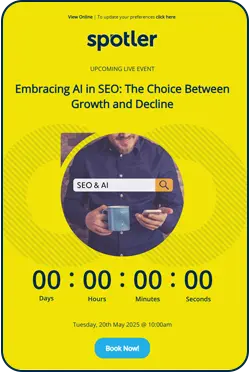
🏆 Winner: HTML
⚖️ Average Difference: 0.11%
Before you write us an angry reply, we know that all emails use HTML!
In our world, “HTML” is shorthand for a media-rich send, with images, banner, countdowns, etc. “Text” means written as if it was from a personal Outlook account.
We were surprised by this result; in all our previous editions text-only emails were clear winners. If you have a theory about what’s changed, feel free to share!
| AM | PM |
| 11 am | 2 pm |
| 10 am | 3 pm |
| 8 am | 12 pm |
🏆 Winner: AM
⚖️ Average Difference: 0.26%
This really seems like one you should test yourself. There’s all sorts of ways to manage your inbox, along with everything else you have to do. Some people will have their email inbox open all day, others will check in periodically, say on the hour. I’ve even met a few people who scan their inbox at 9am, then don’t look again for the rest of the day!
For our particular audience, it seems that morning inbox admin is the rule of thumb.
| 9 to 5 | Outside 9 to 5 |
| 11 am | 7 pm |
| 10 am | 6 pm |
| 11 am | 8 pm |
🏆 Winner: 9 to 5
⚖️ Average Difference: 0.02%
If this is surprisingly close, we think there are 2 factors at play:
It’s not ever so long ago that checking your work emails outside of office hours was physically impossible. You shut down your desktop computer and left the building, and if you thought about work when you were at home, your Nokia 3310 couldn’t handle emails if it wanted to.
Nowadays it’s easy to quickly reply to that one message that you can’t get out of your head, or chase Inbox Zero while you’re brushing your teeth.
This test comes down to whether you think people will notice and remember you better when they’re in “work mode” or when they’ve not got a to-do list and deadlines to think about.
| Monday/Wednesday/Friday | Tuesday/Thursday |
| Friday | Thursday |
| Monday | Tuesday |
🏆 Winner: Monday/Wednesday/Friday
⚖️ Average Difference: 1.66%
We have no cogent explanation for this one.
Like HTML vs Text, the best sending day has shifted more than once. Tuesday used to be the best day by such a clear margin that we internally nicknamed our most important campaign “Tuesday Send”.
So where does all this leave us? It seems that the perfect email campaign would be HTML-rich, with minimalist content in a 2-column layout. The CTA should appear above the fold, and all images should feature people.
Use a single-word subject line that carries an air of mystery, and a snippet that’s only emojis. Set your masterpiece to be delivered on Monday, Wednesday or Friday inside 9-5 office hours. Do these things, and you’ll have more engagement than you know what to do with!
Never forget that email is a mass-marketing channel first and foremost. A small uptick in your email engagement is a lot of extra eyeballs on your content.
Whether you use the exact tests described above, or go off and do your own thing, Mail+ makes it easy to split test any element of your marketing emails.
If you’re already a Mail+ user, the function is there in your account to use straight away.
Not using Mail+ yet? Learn more and feel free to book a demo. We love to show you how you can make more impact in your email marketing.