Planning for a new year always raises the same questions. Are we focusing on the right channels? Are we using AI in the right way? And how do we stand out when everyone has access to the same tools?
2026 won’t be about ripping up the rulebook. But it will reward marketers who think a little differently. Those who understand where human effort still matters most, and where technology can genuinely help.
Based on our research, testing, and day-to-day work with marketers, this article explores what’s changing, what’s evolving, and what isn’t going anywhere. If you’re shaping your strategy for the year ahead, this is a good place to start.
In this blog
New year, new emails
Every year, we run the Great British Split Test. We test a series of elements of email design to see whether we can improve the engagement level of our most important channel.
Our most significant finding this year was a swing in favour of media-rich emails over simple text-based ones.
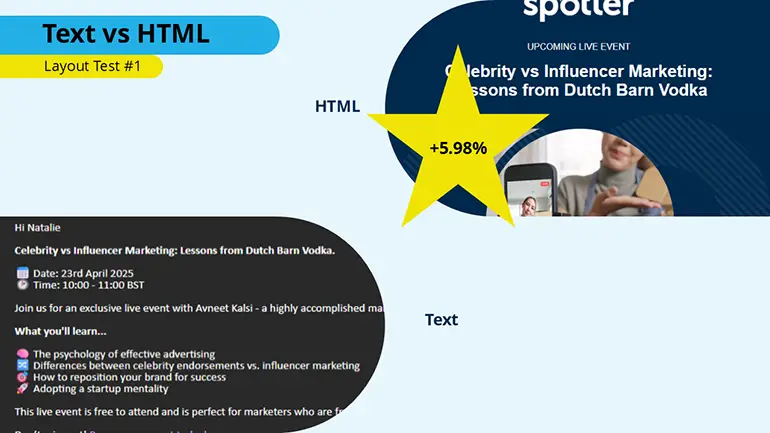
We aren’t able to attribute this to any major change in our audience or our strategy. What I think is going on is the use of AI. Because ChatGPT generates responses by taking the previous word and predicting what will come next based on millions of points of training data, it is more effective at producing standard text than email code. GitHub CoPilot is a more code-focused AI that would do a better job, but its 20 million all-time users is a drop in the ocean of OpenAI’s 700 million weekly usage.
This means that media-rich emails are a strong indicator of human effort. Elsewhere in the research we found more examples that human-written content outperforms AI-written for now.
Given how quickly AI tools and AI adoption are moving, this is a trend we will keep an eye on.
The changing role of content
For AI, by AI?
In 2025, 800 million enquiry prompts were entered into ChatGPT per day. That’s a lot, but it’s dwarfed by the 16.4 BILLION “traditional” Google searches. So, while SEO strategies do need to evolve, the way we have been doing things isn’t dead just yet.
A common question that comes up is “should I use AI-generated content to rank well in AI Search?” It’s not quite that simple; while AI is the intermediary, the queries are still ultimately coming from humans. Human content writers (like yours truly!) understand the language people use when they ask questions.
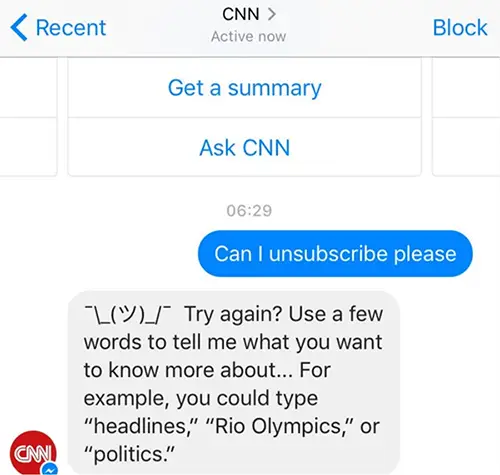
We’ve already seen this through the rise of chatbots. When they first appeared on the scene, chatbots used the language of the company that created them. Customers won’t necessarily do the same; there are usually a bunch of different ways to express what they mean. CNN’s chatbot, for example, could only handle unsubscribe requests if the user typed “unsubscribe” and no other words. As you can see below, most people are a bit more polite than that.
Bye-bye branding?
If AI tools are skimming and summarising your content, then providing their findings in their own words, all in one window, what does this mean for your brand positioning? If a large part of what you do can also be done by somebody else (and let’s be honest, very few businesses are completely unique), but your unique voice is getting lost, what is marketing even for?
I think this is a knee-jerk reaction to the speed at which AI has arrived in our lives. There may be cases where a customer will buy off the back of single “show me the best/cheapest/top-rated [item]” prompt, but the majority will do a bit more research than that. Looking at B2B specifically, there’s no way the complex buying process gets reduced to zero any time soon.
So yes, you need to make sure your content is discoverable by AI. We happen to have a webinar on this exact topic! But keeping your brand voice alive will remain valuable for what comes next.
Understanding aesthetics
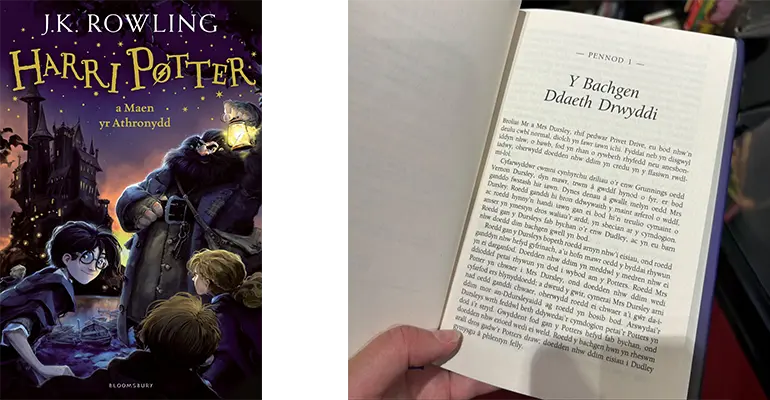
If you want to feel old and out of touch, take a look at Pinterest Predicts. I’ve not seen so many words I didn’t understand since I was given a Welsh translation of Harry Potter and the Philosopher’s Stone on moving to Swansea after university.
All jokes aside, Pinterest Predicts has a very strong track record. They’ve been 88% accurate with their predictions for the last 6 years, and their Global Head of Consumer Marketing says “Predicts trends tend to have a longer life on Pinterest; in fact, Pinterest trends last nearly twice as long as trends elsewhere on the internet.”
The point is that there’s absolute gold here for visual ways to connect with your audience. You’ll struggle to spend a day without coming across the art style known as Corporate Memphis:
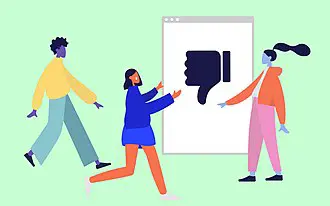
The style itself has a fascinating history; created in the 1980s by the Memphis Group, an Italian design and architecture collective, it had a rebirth when Apple dropped skeuomorphic design from its UI in 2013.
“A skeuomorph (also spelled skiamorph, /ˈskjuːəˌmɔːrf, ˈskjuːoʊ-/) is a derivative object that retains ornamental design cues (attributes) from structures that were necessary in the original. Skeuomorphs are typically used to make something new feel familiar and thus easier to understand and use.”
Unfortunately, Corporate Memphis eventually fell foul of the pattern that follows every design trend;
- Initial adoption by niche players
- A big brand notices and takes a risk on it. They reap a huge reward for being different
- The market latches on and rushes to catch the wave (Think “We’re like Uber for [x]”
- Universal use; it’s now the standard
- Drop-off; start at (1) with a new trend
Every brand wants to be the one at stage 2 rather than 3 or 4, but internal inertia trips them up. Bringing Pinterest Predict’s track record into the discussion could be just the boost you need.
Between the new dominance of media-rich email, and AI engines drawing on more sources than ever for the answers to questions, powerful and distinctive design is probably the most important it’s ever been.
Bonus – 3 things that HAVEN’T changed (and aren’t going to)
Marketing teams need to balance their priorities
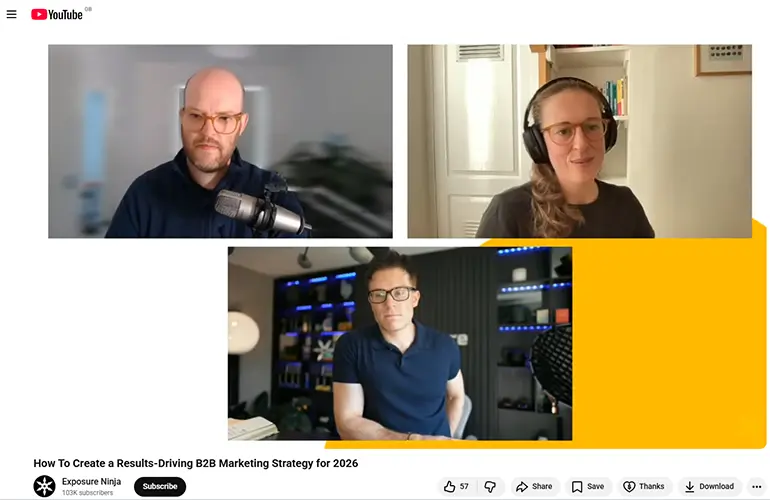
Our SEO partners, Exposure Ninja, tackle the balance of lead generation vs. sales enablement early on in their 2026 strategy session:
Dale: It seems like b2b is a lot about sales enablement… Does that mean the marketing team’s time should go towards creating this material… or should it be more focused on lead generation, on brand awareness?
Charlie: You need both! If you don’t have anything generating leads, who are you giving the marketing material to?!
I’d like to take this argument further. Marketing isn’t only about short-term wins. It also has to account for how today’s work will drive leads 6, 9, and even 12 months down the line.
My favourite personal experience of this is a Head of IT at a mid-size hotel chain. He decided to buy from the telecoms reseller I worked for at the time, on the evidence of his experience at 5 annual conferences. At any point up to that day, we would have dismissed him as a casual browser, possible more interested in the little sandwiches than in the latest developments in Ethernet First Mile telecoms!
Target the right people, not all the people
No matter how brilliant your product is, it’s not going to be for everybody. And that’s good!
Working out exactly who your product is for is the keystone of marketing. Once you know that, you can discover where they spend their time, and that’s your channel strategy in the bag.
The easiest way to find out where your customers spend their time is to ask them! A simple “where did you hear about us” form can yield great results. Event registration pages are a good place for this: people are generally expecting to fill out several fields for an event, whereas for a download you should really stick to email address only.
Your other best friend in this endeavour is UTM tracking. Simply put, a UTM is a little bit of extra length in a URL that you tailor to each place you use it:
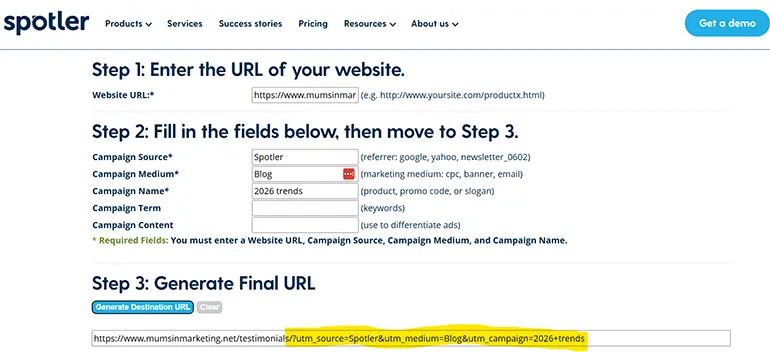
Once you’ve had this in place for a while, you’ll have a clearer understanding of what content each audience is interested in. Maybe your email list is mostly blog readers, while webinars perform best on Instagram. This is your guide to what content to post where for best results.
However, while there will be distinct differences between channel audiences, don’t ignore the crossovers. Nobody cares about your brand as much as you do, so reaching your audience at multiple touchpoints will make you much more likely to stand out.
Across 2025 we saw a marked rise in the power of WhatsApp as a marketing channel, and it’s showing no sign of slowing down. A multichannel strategy gives you the best chance of success here; “Hey [name], since you downloaded our guide to marketing aesthetics, here’s a podcast on the same topic” is far more engaging than a cold message with no context.
Our Digital Marketing Manager, Andy Gilhooley experienced the power and convenience of WhatsApp as a business channel on his summer holiday to South Africa. Directions, check-in options and baggage tracking all on an app he already uses daily, as do many of us.
When it comes to crafting your message, remember that you have access to a completely unique resource: your own customers. Rather than guessing how people talk about discovering and using what you sell, listen to the people already using it.
Email is the humble workhorse
All marketers (including yours truly!) are magpies; we love, love, LOVE shiny new things.
Do you remember the Clubhouse app? It offered mass live-broadcast podcasting, (which always sounds a lot like FM radio to me). It was hailed as the new everything app, although even in its first year the BBC were highlighting potential pitfalls.
As we got back to normal after COVID, both downloads and Google searches for Clubhouse dropped rapidly from their initial peak.

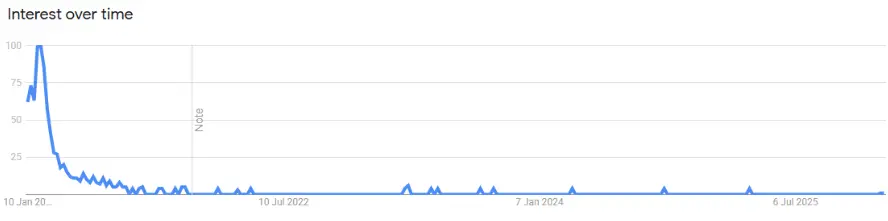
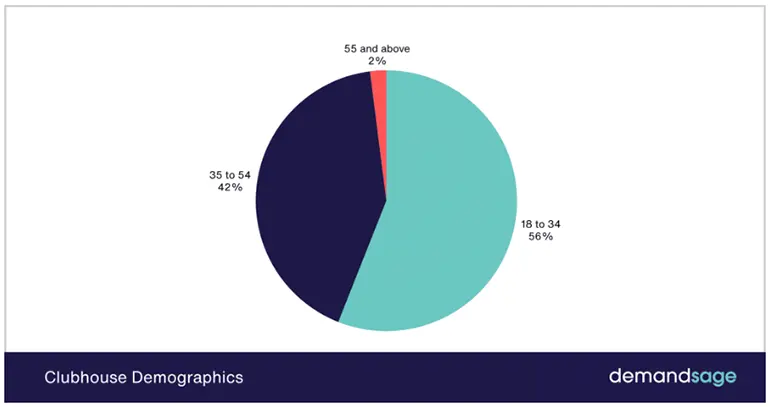
Not only that, but this peak was also skewed towards a white, male, 18-34 audience:
Compare this to email, which is almost equally used among every age cohort:
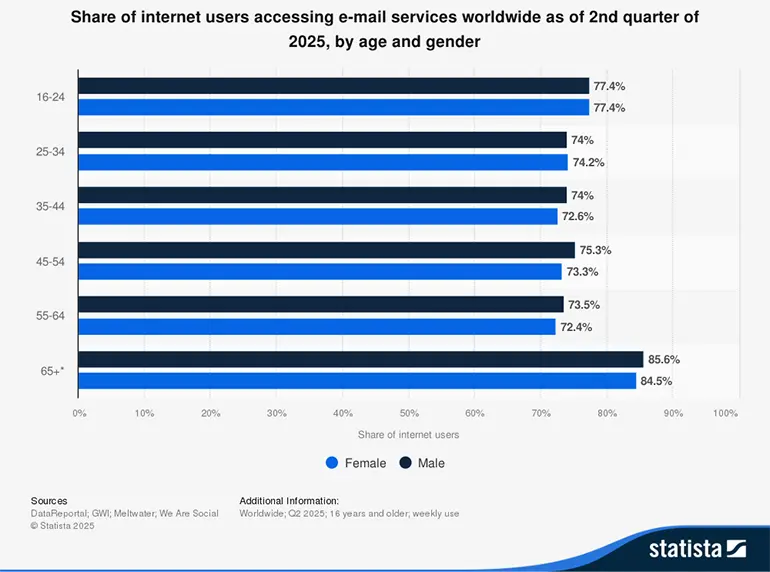
To put it in simple terms, my niece isn’t on Facebook, and my mother-in-law doesn’t use TikTok, but they both have email addresses.
Your best year ever?
With so much change happening so quickly, it’s easy to feel like you’re falling behind. The good news? You’re probably not.
There isn’t enough space here to dive into everything that’s coming up in 2026. Businesses of all types will battle with how to adopt AI effectively, while maintaining a genuine human connection with their audience. Consumers’ expectation will keep growing as social commerce delivers an “always-on” shopping experience, and predictive marketing will show customers what they need almost before they’ve thought of it.
Many of the things that drive results today will still drive results in 2026. Clear messaging. Strong design. And channels that reach the right people at the right time.
AI will continue to shape how marketing works. But it won’t replace the need for human judgement, creativity, and experience. If anything, those skills will matter more than ever.
Plan for the future, but don’t panic about it. Marketing has always evolved. This is just the next chapter.