How many of your customers actually come back after their first purchase?
Peak shopping periods and seasonal events often bring in more orders and new customers. Think Black Friday, Christmas or the start of a new season. But how many of those customers return to buy again? A first purchase is valuable, but the real opportunity lies in turning one-time buyers into repeat customers.
Marketing automation helps you stay relevant after the purchase. You can help customers get more from their products, tailor communications to their buying behaviour or share information based on their interests.
And you don’t need a new offer every time. These five marketing automation examples show you how to keep customers engaged without making every campaign about the next sale.
1. Help new customers get started with an onboarding journey
A customer has just placed their first order. It’s the perfect opportunity to start building a stronger relationship. Rather than immediately sending another offer, focus on helping them get the most out of what they’ve bought.
Imagine someone buys a coffee machine. An automated email series could explain how to set it up, which coffee beans work best and how to keep the machine in good condition.
The same approach works in B2B. A supplier of professional equipment could help new customers with installation guides, product training or instructions for using an online ordering portal.
How do you set up an onboarding journey?
Use the first purchase to trigger an automated onboarding journey. Tailor the content to the product purchased and spread the information across several touchpoints. This way, customers receive useful guidance when they need it.
A well-designed onboarding journey helps customers get more value from their purchase and lays the foundations for a lasting relationship.
2. Stay relevant with automated service emails
Not every automated email needs to include an offer. Sometimes a reminder, maintenance tip or practical advice is far more useful.
For example, a bike shop could send maintenance advice a few months after a purchase. Or a wholesaler could help customers reorder products they regularly use.
The main difference between service emails and onboarding is timing. Onboarding helps customers immediately after their first purchase, while service emails continue to support them over time.
When should you send an automated service email?
Use purchase data, product categories or expected usage patterns to decide when to send relevant service emails. You could automatically share maintenance advice or remind customers when a consumable product is likely to be running low.
Timing depends on the product. A reminder to reorder coffee capsules makes sense at a different point from maintenance advice for a food processor.
By continuing to support customers after their purchase, you can stay in touch without constantly promoting another offer.
3. Identify when customers are genuinely at risk of leaving
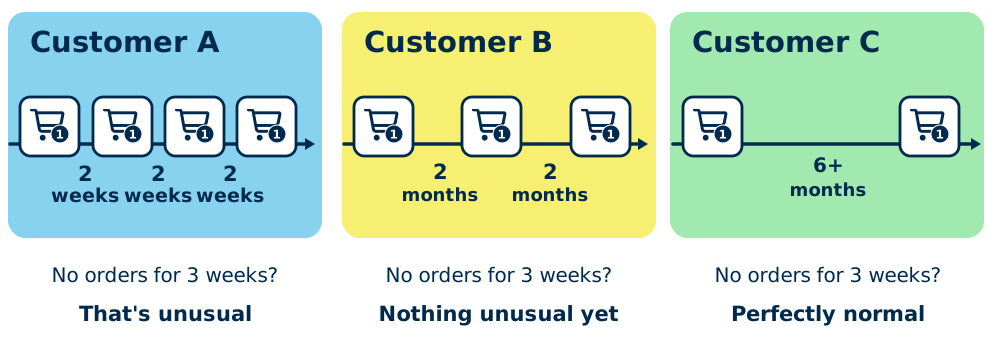
A customer who hasn’t ordered for a few months isn’t necessarily a lost customer. They might only buy twice a year, or their previous purchase might not need replacing yet.
Yet many win-back campaigns are triggered after a fixed period of inactivity. As a result, customers who are simply following their usual buying cycle may receive unnecessary reminders or discount codes.
RFM segmentation helps you understand customer behaviour more accurately. RFM stands for Recency, Frequency and Monetary value: how recently someone purchased, how often they buy and how much they spend.
By combining these insights with each customer’s usual purchasing patterns, you can identify who genuinely needs extra attention.
How Maxima Kitchen Equipment avoids unnecessary discounts
At Maxima Kitchen Equipment, the team discovered that some business customers regularly used win-back discount codes, even though they were already likely to place another order based on their usual buying patterns.
To address this, Maxima developed a model that segments customers according to their purchasing behaviour. Customers who continue ordering at their usual frequency don’t automatically receive a win-back offer. Instead, targeted follow-up can begin when their behaviour changes significantly.
This approach is just as relevant in B2C. Someone who buys skincare products every month needs a different approach from a customer who purchases a gift once a year.
How can you use purchasing behaviour to improve customer retention?
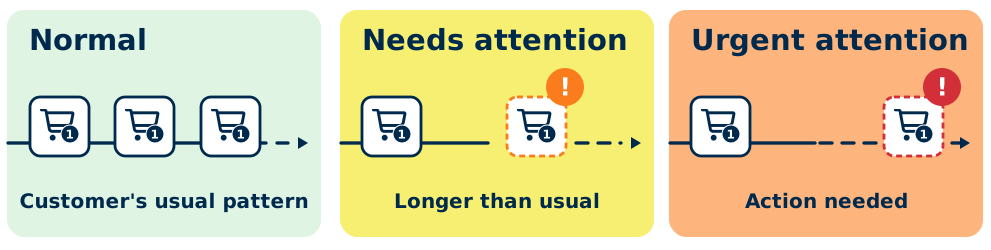
Analyse your customers’ purchasing patterns and identify changes that might indicate they need attention. Use these insights to trigger different automated journeys.
Sometimes a simple reminder is enough. In other cases, a service email or a targeted win-back campaign may be more appropriate.
This helps you avoid offering unnecessary discounts to customers who were already planning to buy again.
4. Get to know your customers and personalise their next visit
Peak shopping periods and seasonal events can introduce plenty of new customers to your business. But after a single order, you may still know very little about their interests.
Marketing automation can help you gradually build a better understanding of what matters to them. You could ask customers about their preferences or use their interactions to identify products and topics they’re interested in.
Imagine someone buys a pair of running shoes. During their next website visit, they also browse sportswear. That interest could help you make future communications more relevant.
By bringing together customer data from different sources, you can build a more complete picture of each customer. This might include purchase history, website behaviour and interactions with email campaigns.
These insights can help you tailor communications to individual interests.
And personalisation doesn’t have to stop at email. You can also use this information to create a more relevant website experience for returning visitors.
See how to recognise returning website visitors
When someone returns to your website, you can use their previous interests and interactions to show more relevant content.
This short video demonstrates how to recognise returning visitors and personalise their website experience.
When collecting and using customer data, be transparent about how it will be used and ensure you comply with applicable privacy regulations and consent requirements.
How can you use customer data to personalise communications?
Start with the information you already have, such as previous purchases and known preferences. Then consider what additional insights would help you provide a better customer experience.
For example, you could create a preference centre where customers can choose the topics they’re interested in. Where permitted, combine these preferences with relevant website behaviour to make future communications more useful.
This creates a more personalised experience without repeatedly asking customers for the same information.
5. Re-engage customers without immediately offering a discount
Some customers won’t naturally return after their first purchase. But that doesn’t mean you need to send them a discount code straight away.
You can also reconnect with customers by reminding them of the useful information and support you provide.
For example, Van Duijnen Koffie used a reactivation campaign to show customers what they’d missed. Rather than receiving a discount offer, customers were invited to stay informed and reconnect with the brand.
You can apply this approach at different stages of the customer relationship. An online retailer might share inspiration for getting more from a previous purchase. A B2B supplier could highlight useful product tips, training sessions or new applications.
How do you create an effective reactivation campaign?
Start by creating a segment of customers who haven’t engaged with your communications for some time. Send them a message with relevant information and a clear invitation to reconnect.
Then look at how they respond. Customers who show interest can receive more content tailored to their needs. If someone doesn’t respond, consider reducing how often you contact them or removing them from certain campaigns.
This way, reactivation becomes an opportunity to strengthen customer relationships rather than another reason to offer a discount.
Keep customers engaged beyond their first purchase
Peak shopping periods and seasonal events are great opportunities to attract new customers. But there’s plenty you can do to build those relationships afterwards.
By sharing relevant information, offering practical support and tailoring communications to customer behaviour, you give people more reasons to return.
Marketing automation helps you deliver these messages at the right time. From onboarding journeys after a first purchase to timely reminders when customers might need something again.
Start with one automated journey that addresses a genuine customer need. See how customers respond and use those insights to improve your communications.
Over time, you’ll build stronger customer relationships without making every campaign about the next sale.
Curious about how to retain customers after their first purchase?
We would love to show you what you can achieve with our software. Request a demo, no strings attached.